Reference:
"Arnhem Their Final Battle, The 11th Parachute Battalion 1943-1944”
by Lt Col Gerrit Pijpers OBE RNLAF & David Truesdale, 2012
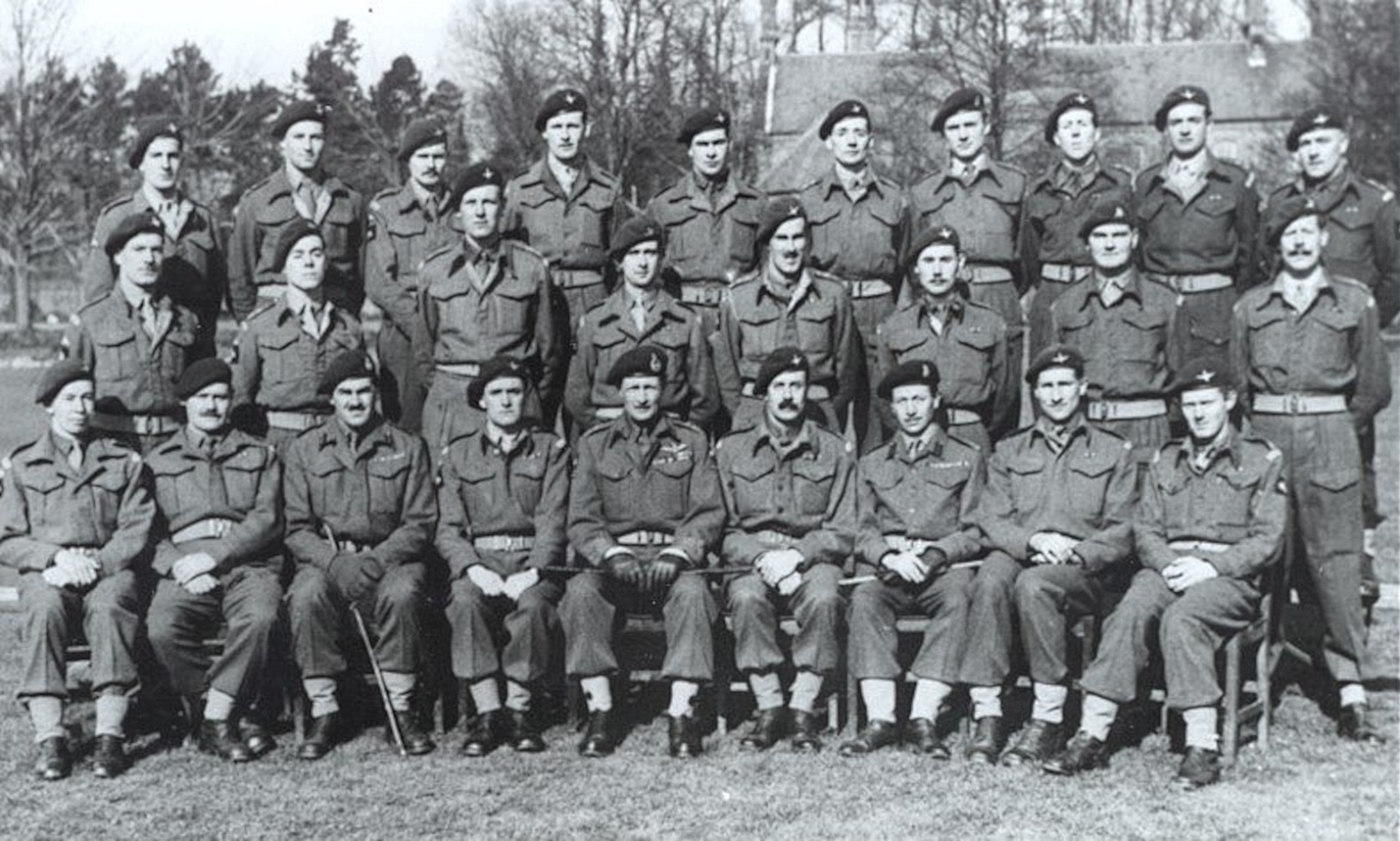
A Brotherhood Forged in Battle
The 11th Parachute Battalion was an airborne elite infantry battalion
of the Parachute Regiment, raised by the British Army in World War II. It exemplified the
highest standards of military excellence. Formed during the darkest hours of World War II, these
brave paratroopers were trained to drop behind enemy lines and execute critical missions that
would shape the outcome of the war.
Fighting against extreme odds at the Battle of Arnhem, the officers and men of the 11th
Battalion demonstrated extraordinary courage under fire. Their sacrifices remind us of the price
of freedom and the valor of those who stand ready to defend it.
Background
Impressed by the success of German airborne operations, the British
Prime Minister, Winston Churchill, directed the War Office to investigate the possibility of
creating a corps of 5,000 parachute troops.
On 22 June 1940, No. 2 Commando was turned over
to parachute duties and on 21 November, re-designated the 11th Special Air Service Battalion, with a
parachute and glider wing, and later became the 1st Parachute Battalion.
March 1943 - Formation
The 11th Parachute Battalion was raised by Brigadier John ‘Shan’ Hackett in Kabrit, Egypt, in March
1943.
Assigned to the 4th Parachute Brigade, 1st Airborne Division the battalion was still
in training when the rest of the brigade left to join the division for the Allied invasion of Italy.
September 1943
The only combat seen by the 11th Parachute Battalion in the Mediterranean, was in September
1943.
'A' Company and the mortar and machine gun platoons parachuted onto the island of Kos in the
Dodecanese and captured the airfield.
The Italian garrison numbered around 4,000 men, but did not put up much resistance.
The company was withdrawn soon after and rejoined the battalion in Palestine.
December 1943
In December 1943 the battalion rejoined the 4th Parachute Brigade who by this time were in England, on 18 December boarding His Majesty’s Troopship Orion, an ex-Royal Mail ship of the Orient Line.
January 1944
The Orion arrived at Liverpool in the late afternoon of 4 January 1944.
Forty-eight hours
later the 11th Battalion departed for a month’s disembarkation leave.
South Leicestershire
After leave the 11th Battalion occupied several villages within a ten-mile radius south of Leicester.
- Battalion Headquarters located at The Lodge Manor House Great Glen,
- ‘A’ Company at Carlton Curlieu Hall,
- ‘B’ Company at Kibworth Hall,
- ‘C’ Company Glen Parva Grange, while
- 'S' Company was ensconced at Wigston Fields.
Melton Mowbray
A
few weeks
later it was decided that the 11th Battalion had to move to Melton Mowbray and here they took over a
very good pre-war military barracks: Welby Lane Camp.
4th Parachute Brigade spent the entire month of February 1944 undergoing parachute training at Number 1
Parachute Training School (1PTS) at Ringway, near Manchester. This was to acquaint the Brigade with the
latest training techniques and equipment. From that period onwards many exercises - large and small -
followed until September 1944.

September 1944
After many months of extensive training and fully fit for what was to become the greatest battle of their lives, the heroes of the XIth Battalion parachuted into the Battle of Arnhem. Facing overwhelming odds, they sustained heavy casualties, losing so many men that after returning to Melton Mowbray, the battalion was disbanded. However, the men of The 11th Battalion brought hope to the people of Arnhem and the surrounding area.
1947 - Territorial Army
When the Territorial Army was reformed following the war in 1947, a new 11th (TA) Battalion was raised. It was formed by the conversion of the 8th Battalion, Middlesex Regiment. It was part of the reserve 16th Airborne Division. Following defence cuts if reverted to being the 8th Battalion, Middlesex Regiment in August 1956.