14637388 Private Douglas Ford
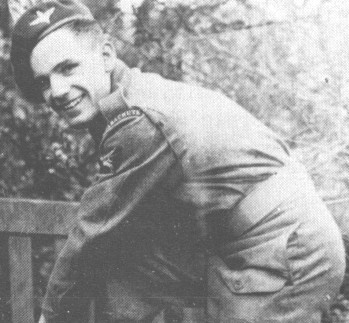
14637388 Private Douglas Ford was born on 29th December 1924, in Sheffield and joined the Army in early 1940s.
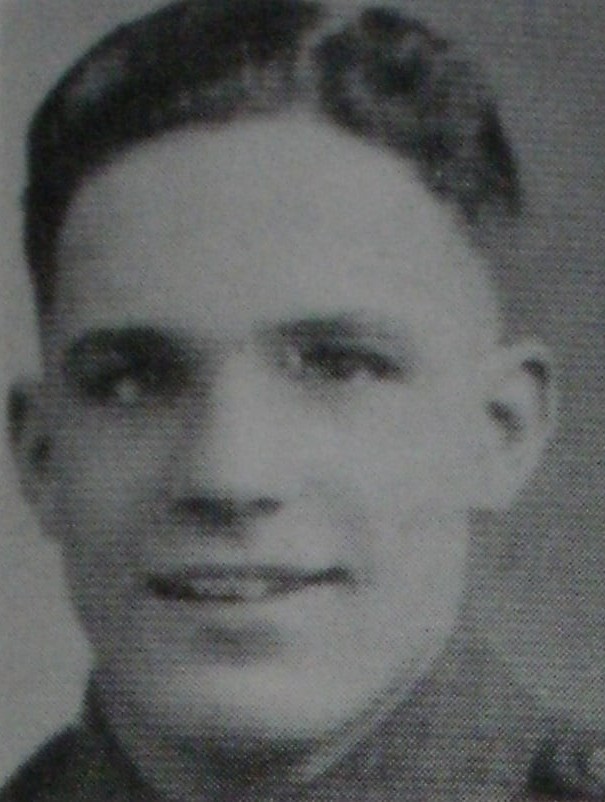 His regiment was the Green Howards and he soon transferred to the Parachute Regiment.
He was on parachute course
93 at
Ringway, near Manchester, from 29th November to 13th December 1943.
After becoming a qualified parachutist he was
assigned to No. 1 Section, No. 1 Platoon, A Company, 11th Parachute Battalion.
He was barely twenty years old when
he was dropped into Arnhem and in the next few days saw his Battalion shattered.
In 1986, he read the newsletter of
the Society of Friends of the Airborne Museum in Oosterbeek. It became apparent from this that the Friends knew very
little about the 11th Parachute Battalion, and in response, he wrote a letter sharing his own experiences.
“As we
flew towards the drop zone you could see tracer bullets passing the aircraft. The plane next to us caught fire as
the men were jumping.1
I arrived at the rendezvous point under some difficulty as enemy fire was coming from the
woods nearby. We eventually moved off towards Arnhem and we had a few skirmishes on the way.
Early next morning we
moved up towards the Saint Elizabeth Hospital and we came under heavy fire from German machine guns and a
Self-Propelled Gun on the far side of the river.
Lieutenant Vickers who was our platoon commander told us that we
were to go round the back and destroy an enemy machine gun post. This we did, killing all the crew. We were very
heavily mortared and quite a few men were hit including my section
Sergeant Hillier and Lieutenant Vickers. Vickers
refused treatment and carried on.
We were ordered back and found ourselves fighting along men round the St.
Elizabeth Hospital. From there we were driven further and further back, eventually retreating to Oosterbeek.
Eventually I was digging in just near the 75mm Howitzers in the Old Church area. A 6-pounder anti-tank gun was in
our area but the crew had suffered casualties. Volunteers were called for to try and get it into action. An A
Company member by the name of
Private Kerr2 volunteered but the gun received a direct hit and Kerr was wounded in the
head. He went for the first aid post and rejoined later.
During a lull in the fighting Lieutenant Vickers ordered us
back for a rest in the church when possible. I sat in one of the pews trying to get myself cleaned up a little along
with other rather exhausted men. Major Blacklidge came over and asked how we were doing.
Then suddenly a blinding
flash and I found myself on the floor unable to move. Major Blacklidge had fallen across me. He had been wounded
in the chest. Three other soldiers and myself took him on a stretcher to the first aid post in Mrs. Kate ter
Horst’s house.
When I returned to the church it was already dark and I was told to dug in at the rear of the church.
There I found Lieutenant Vickers and Lieutenant Blackwood and a half a dozen other soldiers.
From there we were
taken by Lieutenant Vickers to reinforce a position being held on the other side of the perimeter. We called it “The
Ferry Side”. When we arrived a few 11th Battalion men were already dug in. There was also a Vickers machine gun.
Lieutenant Lord Buckhurst, who was already there, told us what positions to take. I will always remember this
officer as whenever we came under fire -and it was certainly rough on the edge of this wood- he went to every slit
trench when there was a lull in the fighting, regardless of his own safety to ask how we were.
After a couple of
days we went back to our original positions by the church. We were told that we were evacuated that night, but that
we had to stay as rear guard.
When we did eventually move, daylight was breaking. We arrived at the water edge only
to be told by an officer that the boats would not be coming back. We could either go back or try to swim the river.
We could see men struggling in the water with their clothes on.
 We were five of us:
Private George Edwards, Lance
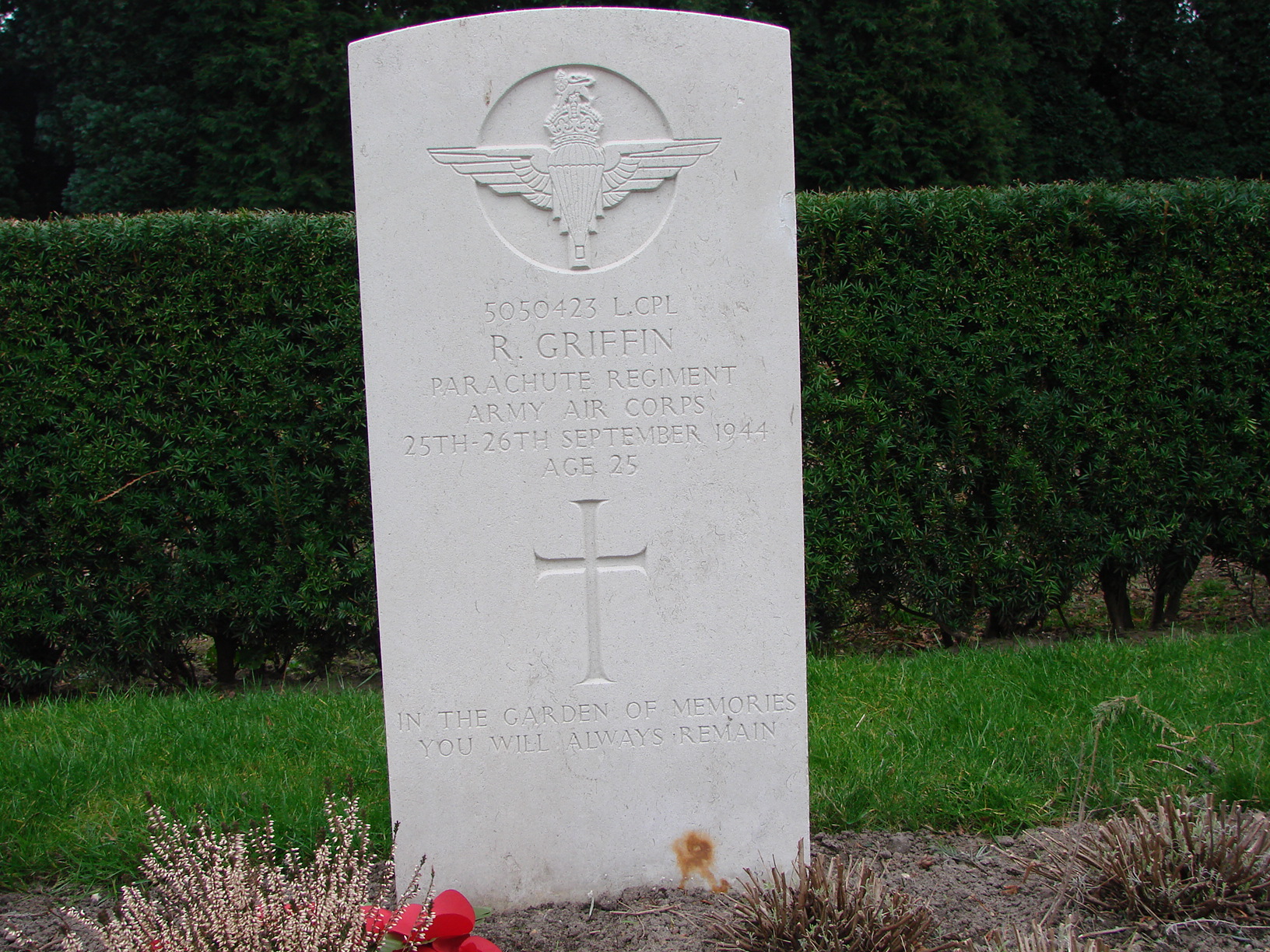
Corporal Ronald Griffin3, two others whose names I no longer remember and myself. We decided to swim the river, but
Griffin said he would rather take his chance in the woods.
We were five of us:
Private George Edwards, Lance
Corporal Ronald Griffin3, two others whose names I no longer remember and myself. We decided to swim the river, but
Griffin said he would rather take his chance in the woods.
The rest of us took our clothes off and started to swim
the river. We were fired on and one man was hit and another turned back.
Edwards and I made it to the far bank. From
there on we went towards Nijmegen, me dressed in a dress and Edwards in a blanket which we found at a farmhouse.
After a couple of days we were brought by American trucks to Brussels and from there flown to Blighty.
I found one
of the most distressing things in my life was on entering the same barrack room I had left a fortnight before full
of jolly men. Now only for about six of us to re-enter.
I eventually joined the 3rd Parachute Battalion along with
the remains of the 11th Battalion men. With the 3rd Battalion we went to Palestine, but that is another story”.
Doug died in Leicester in 1996 at the age of 72.
1 Either the aircraft of Captain Frank D. King or Lieutenant Keith F. Bell.
2 Private William J. Kerr was awarded the Bronze Lion (Dutch bravery award) for his actions at Arnhem
3 Lance Corporal Ronald Griffin, A Company. He drowned on 25-26 September 1944 and is buried at Rhenen General Cemetery, Plot 27. Row C. Grave 10