4858658 Private James William Duplock
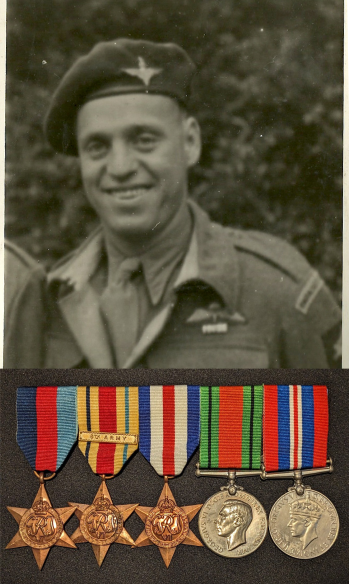
4858658 Private James William ‘Jim’ Duplock was born 24th July 1920 in Ratby, Leicestershire. His parents
were James Duplock and Maud Mary Duplock (née Pemberton). His father worked as a quarryman for Enderby and
Stony Stanton Granite Company. In June 1921 James and his parents were living in the
home of his grandparents in Hinkley Road, Sapcote, Leicestershire.
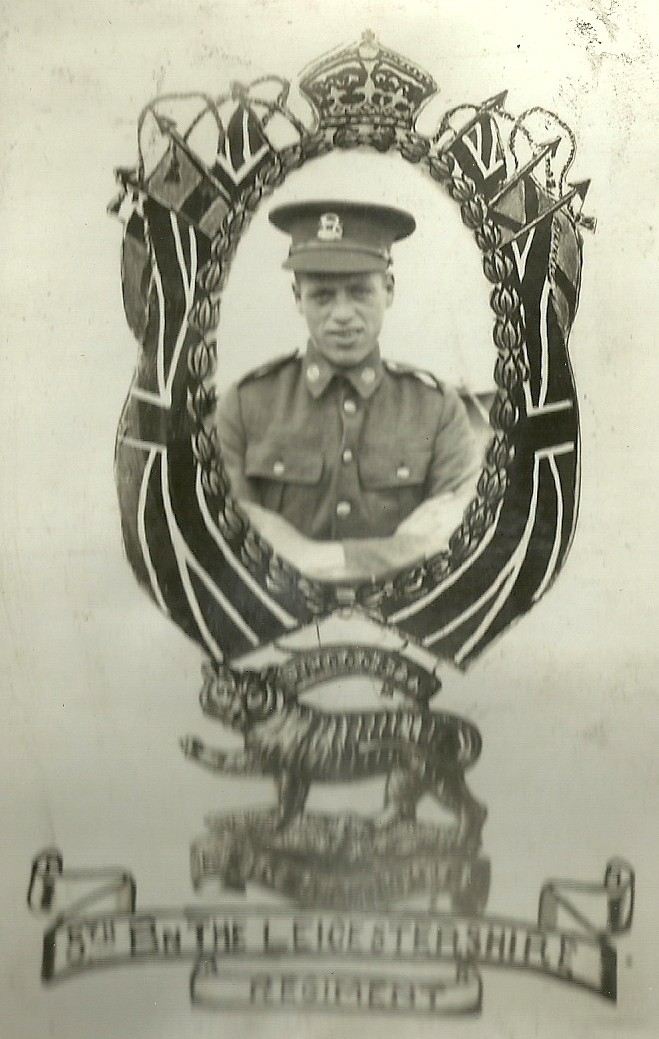 Keen to support the war efforts, even before was had been declared in 1939 Jim had joined the Territorial Army.
He served in the 5th Battalion The Royal Leicestershire Regiment before being
transferred to the Green Howards. Jim served throughout the North Africa campaign, where he was with
the troops addressed by Churchill and Montgomery.
He fell ill and while recovering in the Alexandra hospital so
volunteered to join the Parachute Regiment, thinking it would get him home to England to do his training.
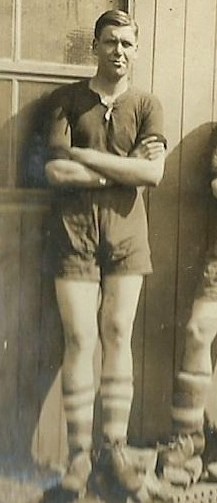 Jim joined
the 11th Parachute Battalion in 1943, which was raised from volunteers in the Middle East at Kabrit in Egypt. He was
assigned to 1st platoon, ‘A’ Company. Like many other members of the 11th Battalion, Jim enjoyed playing
football.
Jim joined
the 11th Parachute Battalion in 1943, which was raised from volunteers in the Middle East at Kabrit in Egypt. He was
assigned to 1st platoon, ‘A’ Company. Like many other members of the 11th Battalion, Jim enjoyed playing
football.
Instead of going home to England, Jim, aged 22, was among those who undertook
their parachute training at Ramat David in Palestine on course No. 45, from 01 to 12 June 1943.

Although Jim and his brothers Roland and George were fighting many miles away, they were still remembered back home.
In the Friday 23rd July 1943 edition of the Hinkley Times and Guardian their parents sent all three boys
congratulations and birthday greetings.
A couple of months later, Jim took part in his first operational drop. In September 1943 he parachuted into the
Greek Island of Kos.
On 10 December 1943, the Battalion found itself
entrained and bound for Port Said. On 18 December 1943 the Battalion boarded His Majesty’s Troopship Orion for the
UK.
The Orion arrived at Liverpool in the late afternoon of 4th January 1944 and, after leave, the 11th
Parachute
Battalion occupied several villages within a ten-mile radius south of Leicester; areas Jim would have known well,
having
been born and raised just outside the city.
With the Battalion being so close
to Leicester there were many temptations for the soldiers, discipline was lax and there were many cases of soldiers
going absent without leave (AWOL). A few weeks later it was decided that the 11th Battalion had to move to Melton
Mowbray and here they took over a very good pre-war military barracks: Welby Lane Camp.
Jim, was one of thousands of
paratroopers who took part in Operation Market Garden. The 11th Parachute Battalion, part of 4 Parachute Brigade,
were to jump on Monday 18th September 1944.
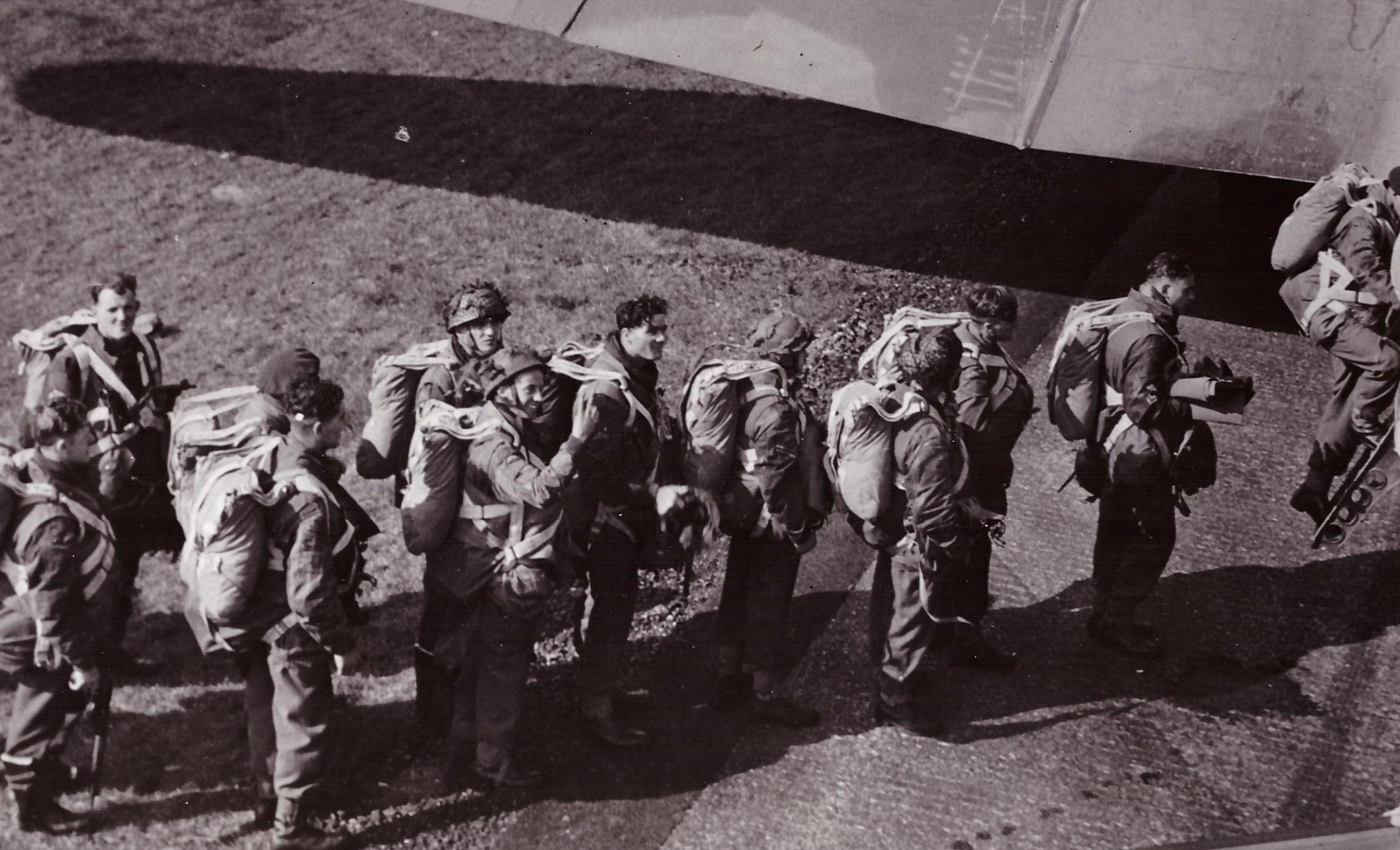 When Jim climbed aboard the Dakota at Saltby airfield bound for Arnhem,
it was his second combat jump. There were about 20 men in the Dakota and the mood was good on the plane. Jim
jumped from just a few hundred feet, laden with a heavy kitbag, and had only a few seconds to prepare for landing.
When Jim climbed aboard the Dakota at Saltby airfield bound for Arnhem,
it was his second combat jump. There were about 20 men in the Dakota and the mood was good on the plane. Jim
jumped from just a few hundred feet, laden with a heavy kitbag, and had only a few seconds to prepare for landing.
“You used to drop from as low as you could, I think it was 350 feet at Arnhem, but you couldn’t get down quick enough with all the bullets flying around”.
From the drop zone, Jim headed towards Arnhem with his Battalion, where
they arrived late in the evening of September 18.
Early the next morning, the attack began towards the road bridge
in Arnhem to relieve Lieutenant Colonel Frost's men. Jim recalled being dug in by the side of the road when two
sections from the 2nd Battalion The South Staffordshire Regiment came past.
“They said there was a tank coming and they had got nothing to stop it. Our major told us to stand fast. That tank came right up to us as we lay there, but they never saw us. One of its soldiers opened the turret and looked around – we could have shot him, but we didn’t dare in case it turned on us. One of the things I think about is when Major Gilchrist told me to go into a building, but then decided he would go in himself. He got wounded and had to shoot some Germans. That would have been me. We knew Jerry was close and we’d gone through the gardens because the houses were getting fired on, so we thought we’d be safer there.”
Two days after Jim had landed and after a hard battle near the St Elisabeth Hospital and in the
Lombok area west of Arnhem, his battalion had to make its way towards the village of Oosterbeek. At this stage there
were only about 150 men of the 11th Battalion.
Lieutenant Colonel Lea was not among them; he had been wounded and
taken prisoner. Jim and several of his comrades were captured in a school, as they made their way through back
gardens in the war-torn city of Arnhem.
Jim was taken Prisoner of War and sent to Stalag XIB at Fallingbostel and
later sent to Stalag XIIA at Limburg, Germany where he was given
POW number 90038.
“We had to go to work on the German railways. One of my jobs was as a mechanic, working on things like the piston rods. We never did the nuts up enough, so they soon took us off it.”
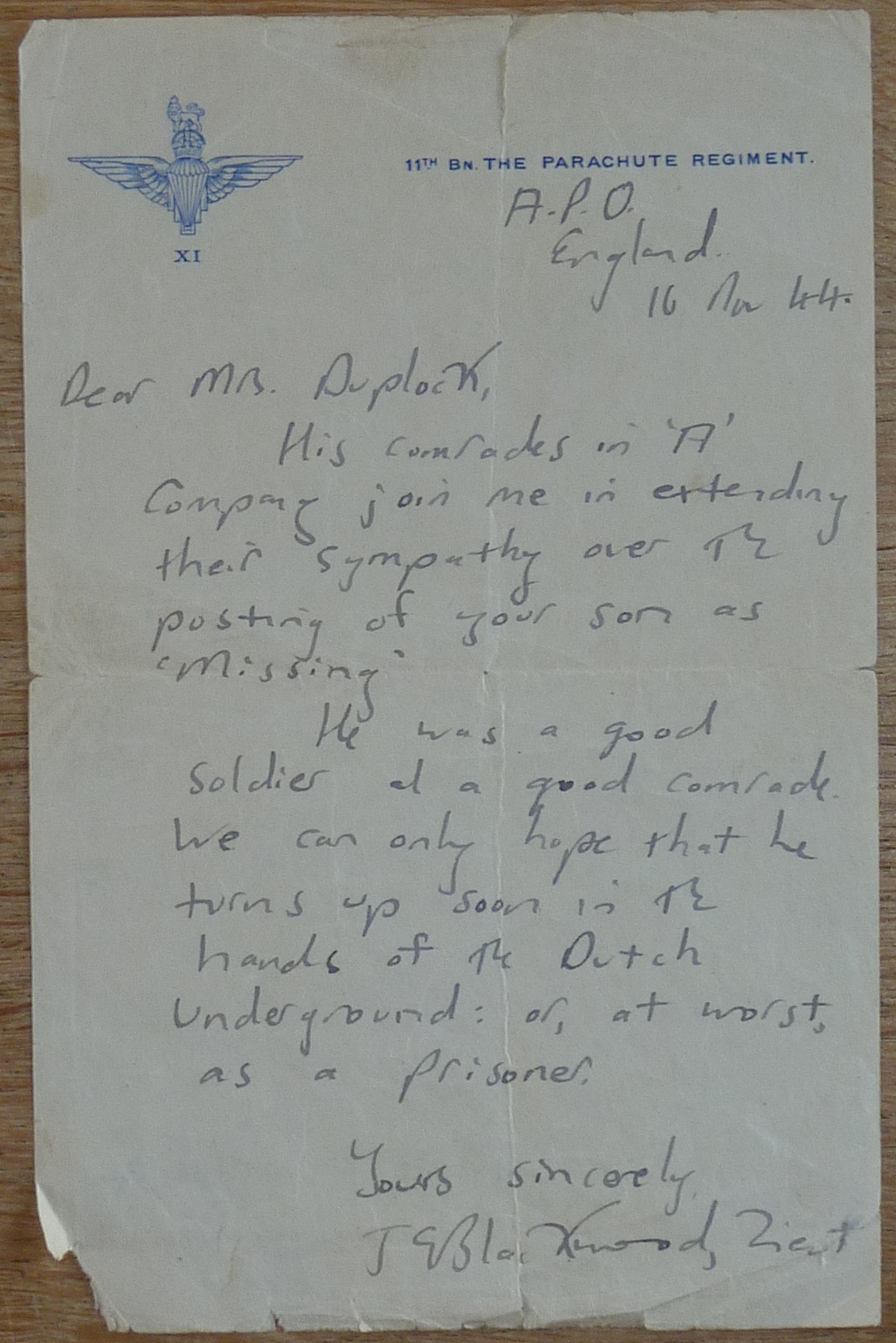 After his capture, a letter was sent by Lieutenant Jock Blackwood MC to his mother in November, 1944, which read:
“His comrades in A Company join me in extending their sympathy over the posting of your son as missing. He was a good soldier and a good comrade. We can only hope that he turns up soon in the hands of the Dutch Underground or, at worst, as a prisoner.”
It was only after Christmas, 1944 that Jim was able to send his family in Sapcote a postcard letting them know he was alive. Jim said:
“That postcard was the first my parents knew I was alive. They didn’t know what had happened to me and they were very pleased when I was back home.”
In the summer of 1948 Jim married Sarah A Bradshaw in Lutterworth, Leicestershire and the couple settled in Lutterworth,
just a few miles south of where Jim had been born and raised. They remained together until Sarah's death in 20023.
After Sarah's death, Jim moved into a flat where remained until he died on December 10, 2016, at the age
of 96.