4691920 Corporal Clarence Leslie Leggett
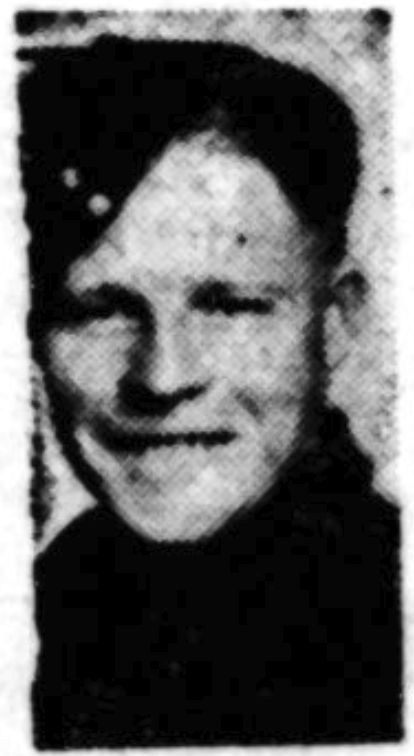
Please note there are references in this story to the award of the Military Medal. Unfortunately, we have been unable to obtain official confirmation of this award and are therefore unable to authenticate any such award. Please contact us if you are able to provide any information that may assist us.
Clarence Leslie Leggett was born to Archie W. E. Leggett and his wife Lily (née Mitchell) on 6th May
1917
in South Kirkby, Yorkshire.
In 1921 he was living in South Kirkby with his parents, his 3 older siblings and his 3 younger siblings. At this
time Archie was employed as a coal miner at
Carlton Main Colliery, South Elswell; an occupation that, after finishing school, Clarence also went into until the
outbreak of war in 1939.
In early 1939, Clarence was living with his parents and brother Archie (Jnr) at 78 Park Estate, South Kirkby,
Yorkshire. On 18th June he became one of the first men to join the war effort and enlisted, initially as
a Territorial and with the K.O.Y.L.I.
In 1941 Clarence married Mary Ella Bassinder in Halifax, West Yorkshire. She was born on 16th July 1919
in Goldthorpe, Yorkshire. In 1919 she had
been working as a Twister Worsted. The couple made their home at 4 Cambridge Place, Siddal, Halifax, Yorkshire.
Clarence was on Parachute Course No. 108 at Ringway near Manchester from 19 to 31 March 1944. Also on this course
was Private
(later to be Corporal) Bill Larder. They made many of their practice jumps on the same stick, leading to Bill later in life often referring to Larder and Leggett when talking to his
daughters about his practice jumps.
After successfully completing his parachute course he was assigned to HQ Company, 11th Parachute Battalion and posted
to Welby Lane Camp
at Melton Mowbray.
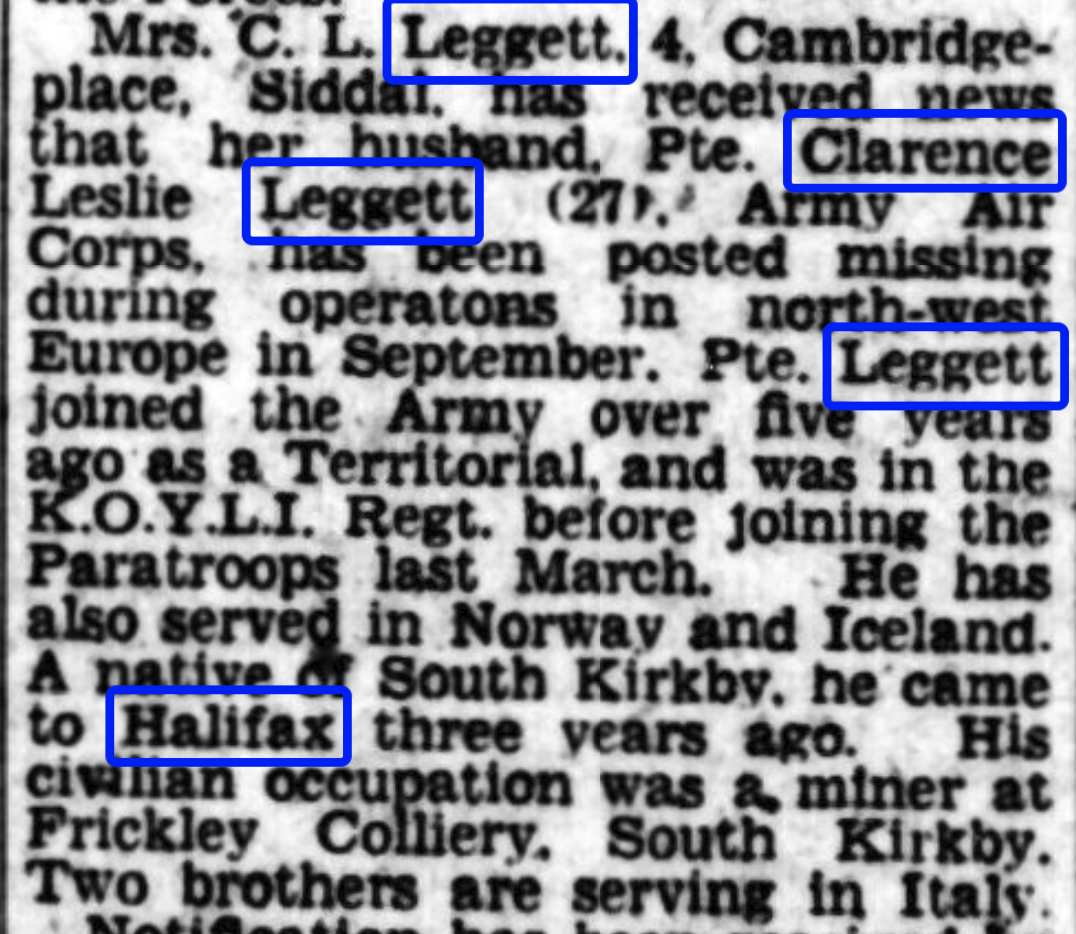
In September 1944, along with the other members of the 11th Battalion, Clarence fought in the Battle of Arnhem. Following the battle of Arnhem, he was initially reported missing. The Friday October 13 1944 edition of the Halifax Daily Courier and Guardian made the following announcement:
"Mrs C. L. Leggett, 4 Cambridge Place, Siddal, has received news that her husband, Pte Clarence Leslie Leggett (27) Army Air Corps has been posted missing during operations in north-west Europe in September. Pte Leggett joined the army over five years ago as a Territorial, and was in the K.O.Y.L.I. Regt before joining the paratroops last March. He has also served in Norway and Iceland. A native of South Kirkby, he came to Halifax three years ago. His civilian occupation was a miner at Frickley Colliery, South Kirkby. Two brothers are serving in Italy."
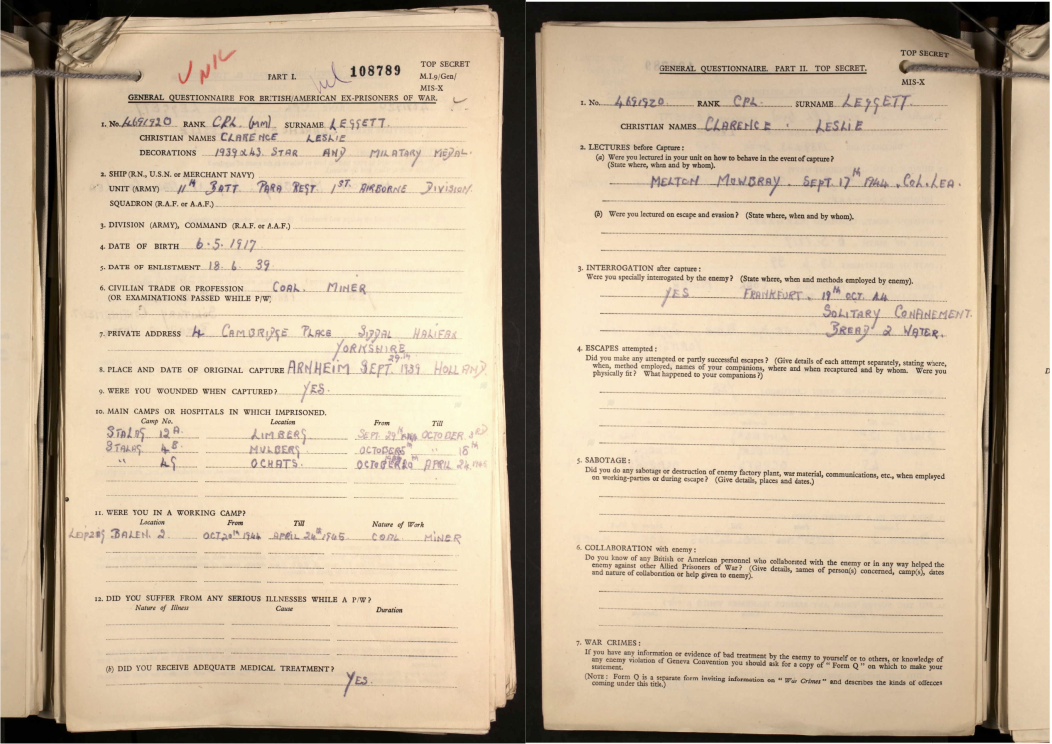
Clarence was given the Prisoner of War Number 75986 and held in three different Prisoner of War camps. He had
attended a lecture on September 17th 1944 given by
Lt Col Lea at Welby Lane Camp about how
to behave in the event of capture; the lessons he learned during this lecture was put to the test on
19th September 1944 when he was not only interrogated but also
held in solitary confinement and fed only bread and water. He was also forced to work. Whilst being held between
October 20th 1944 and April 24th 1945, at Stalag 4G, he was forced by his German captives to
work as a coal miner in Leipzig Balen 2; work that his previous civilian career
would have equipped him well to perform but which he probably would have preferred not to have been forced to
carry out.
Following Clarence's discharge from his military service on 17th December 1945, he and Ella lived together in Cambridge Place, Siddal and
had a daughter, Marilyn
Lesley. Clarence probably
thought that having survived the war and prisoner of war camp, he had seen the end of tragedy in his life. On
Thursday
March 22th March 1962, he experienced something unimaginable. After finding the living room of his home
ablaze he forced his way
through the flames to save his daughter. He bravely tried to reenter the house to save his wife
but was prevented from doing so
by neighbours. Firemen attended and found Mary in an upstairs room. She was taken to the Halifax Royal Infirmary but
did not survive and was confirmed dead in the hospital.
The support of Clarence's neighbours and local community was shown after this tragedy by the fund that was set up to
support
him and his daughter. The Wednesday April 18th 1962 edition of the Halifax Daily Courier & Guardian
reported that the fund at that time stood at
£390, including a contribution of £21 13s 8d from Siddal Ex-Servicemen's Club. Furthermore, this total excluded a
donation of £40
from Halifax's Distress Fund by the Mayor. Mary Ella was buried on 27th March 1962.
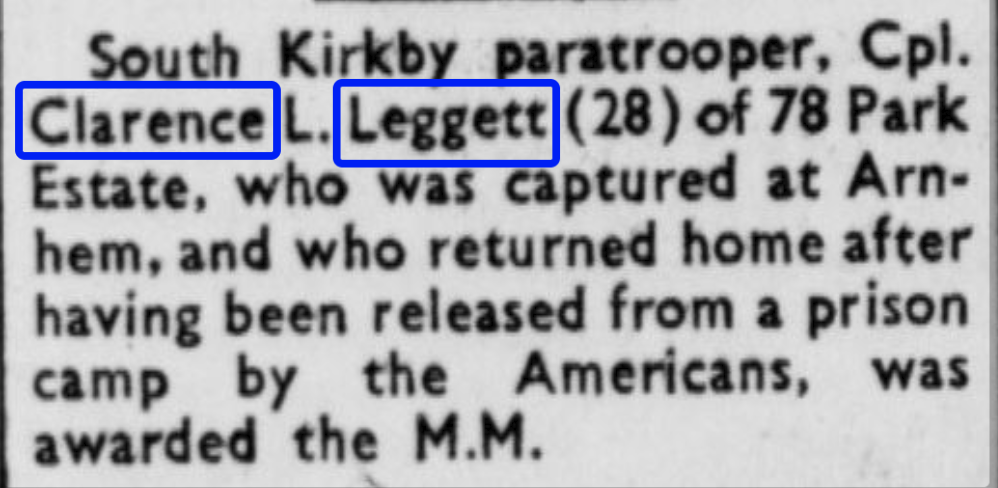
Clarence's war efforts continued to receive recognition. His release from being a prisoner of war was commemorated
20 years later, on 29th May 1965 by The South
Yorkshire Times.
Clarence remained unmarried for 22 years following the death of Mary until 1984 when he married Elsie Cawthorne in
Leeds, Yorkshire