2932551 Private William James Carroll
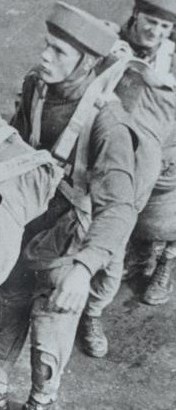
2932551 Private William James Carroll was born on May 23, 1919 in Liverpool.
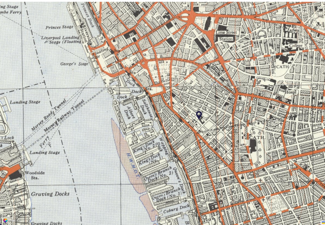
In the 1939 National Register, taken on 29th September 1939 was living at 34 Pitt Street, Liverpool, with:
- William J Carroll bn: 19 October 1879 Occupation: Tin Smith Labourer
- Jane Carroll (née Rush) bn: 23 December 1893 Occupation: Unpaid Domestic Duties
- Charles A Carroll bn: 11 Jul 1913 Occupation: Ships Store
- Catherine McKillen (née Carroll) bn: 12 Nov 1916 Occupation: Press Stamp Operator
- William J Carroll bn: 23 May 1919 Occupation: Painters Packer
- Ann Carroll 26 December 1921 Press Stamp Operator
Just 3 weeks later, on 19 th October 1939, he enlisted in The Liverpool Scottish.
William successfully completed Parachute Course No. 93 at Royal Air Force
Ringway between 29th November and 13th December 1943. His Parachute Instructor's comments: 'Average, awkward, but
unhesitant'. After completing his course he was assigned to HQ Platoon, Support Company as Batman
to Captain F.D. King.
When the 11th Parachute Battalion left for Holland William was number 2 to jump, just behind
Captain King. The flight to the Dutch coast was uneventful, but once they flew over occupied territory, everything
changed completely. There was a sound in the plane like someone was throwing a handful of hard peas against the
belly of the plane. At first it just hit the bottom, but then it started coming through. You could see the tracers
coming up and just going through the floor. The red light came on and all the men got up and hooked up, ready to jump.
When waiting
for the green light William was hit in his hand and he shouted 'I have been hit!'.
Company Sergeant Major Gatland looked at
William's hand and said it wasn't too bad and he would be okay.
At that moment the plane gave a slight lurch and went
into a shallow dive. Smoke went past the windows of the airplane, pouring out of the starboard engine. The light was
still red, but King made the decision to jump and ordered his wounded batman, Carroll, to jump immediately after
him. There was minor disorder, but no panic at all.
Some of the men were wounded due to the fire from the
ground. King shouted "Go, Go, Go" and out they went.
William landed on the west side of a canal called 'De Grift'
between the villages of Rhenen and Wageningen and he saw that also another plane had crashed east of the canal.
When
Captain King had assessed the situation he ordered William and CSM Gatland to find a suitable place to cross the
canal. When William and Gatland arrived at the canal they saw a German patrol approaching. One of the Germans
summoned them to surrender but William and Gatland opened fire. They shot one of the Germans and the others fled and
they never saw them again. [It was SS-Rottenführer De Jong who was killed during this exchange of fire]
After this
little skirmish William and Gatland found a shallow place to cross the canal and showed it to Captain King. They all
waded across the canal and King doubled them towards the drop zone Y at Ginkel Heath. With help from the Dutch
resistance, William's group was escorted towards the drop zone on the Ginkelse Heide. Halfway through, however, near
the railway line Arnhem – Utrecht the Dutch guide was captured by German soldiers, and the group had to make a
detour.
So Captain King decided to backtrack and try to cross the railway further west. They moved and found a place
to cross about a quarter of a mile away from where they had originally intended to go across. There King made a
reconnaissance with his batman, William Carroll.
The railway was easy to cross and King was very glad that in
Holland the electric wires were overhead. Then a German sentry, who showed a red light, challenged them. Without
hesitation Captain King and William shot him, took his rifle and lay still. All around them shone other lights and
there was much way-ward firing from the Germans.
For a second time Captain King and William had to retreat and
bypass the enemy in order to return to their Battalion. At a certain point, the group arrived in Wolfheze, and from
there they were ordered to take up position at the 'Johannahoeve', east of Wolfheze. Then a German self-propelled
gun came from the north towards William's fox-hole and it was at this time that he got hit for the second time.
William dug deeper.
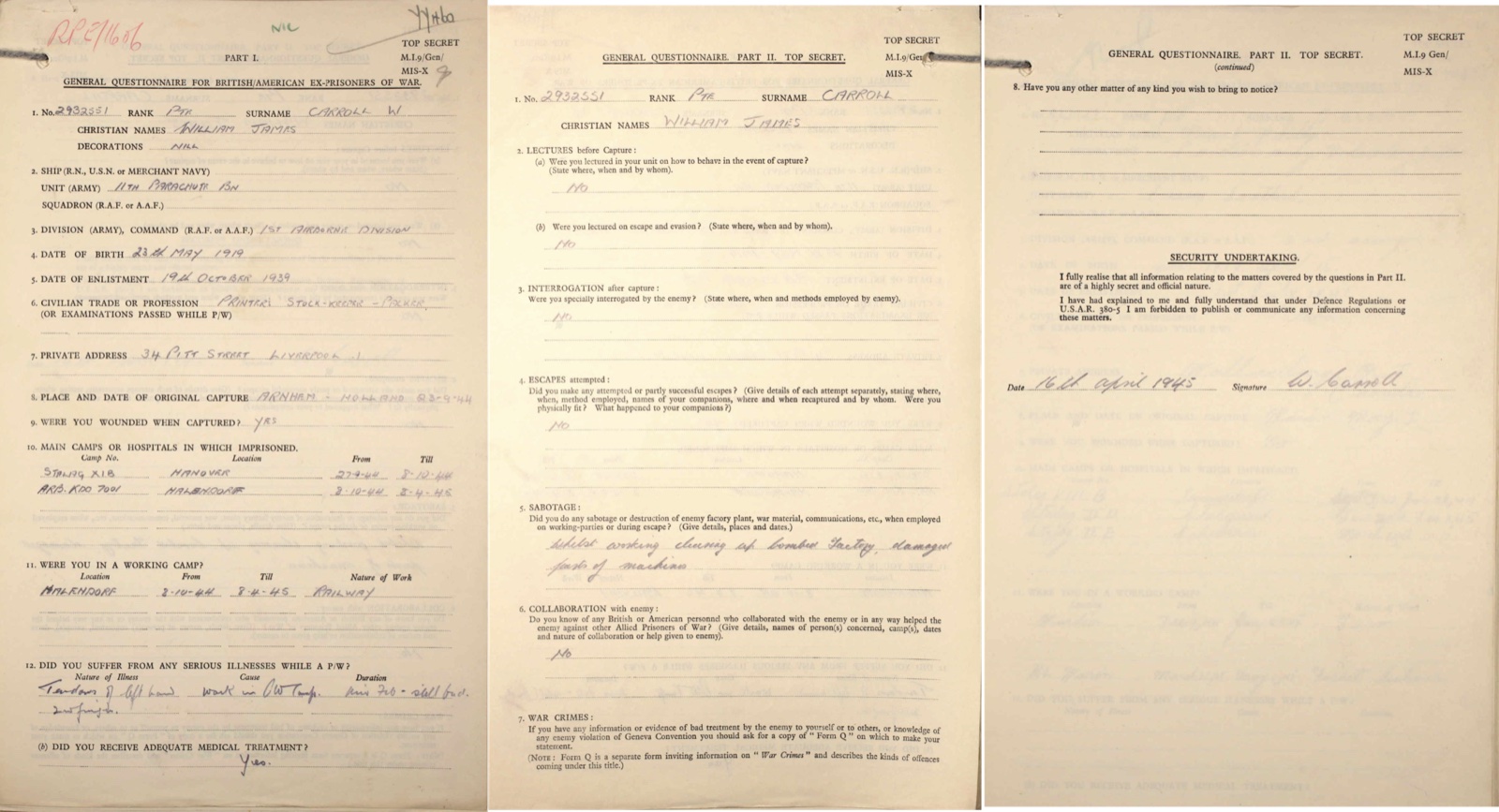
After days of fighting William was taken prisoner of war and taken by train in cattle wagons to Stalag XIB in Fallingbostel, Germany. There he was registered and given the prisoner of war number No. 117761. William was placed in a labour commando to work on the railway line and clear up bombed debris in Halendorf from October 8, 1944, to April 8, 1945. While working clearing up a bombed factory, he sabotaged several machines.
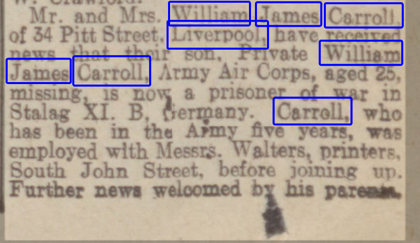
On Friday December 8th 1944, The Liverpool Echo ran an article about William James being a POW.
William passed away in late December 01 1983, aged 64.