3455512 Lance Corporal John Duffy
3455512 Lance Corporal John Duffy was born on the 27th July 1916 in Rochdale to parents Patrick Duffy and Mary Alice
Duffy (née Gallagher). He was baptised into the Roman Catholic Church at Rochdale St Patrick on 30th
July 1916. In 1921, the family was living at 20a Procton St, Rochdale. John was the four child of seven living with his parents at
this address.
Before joining the Army in April 1940, John had worked as a concrete foreman, having followed his father into the building trade.
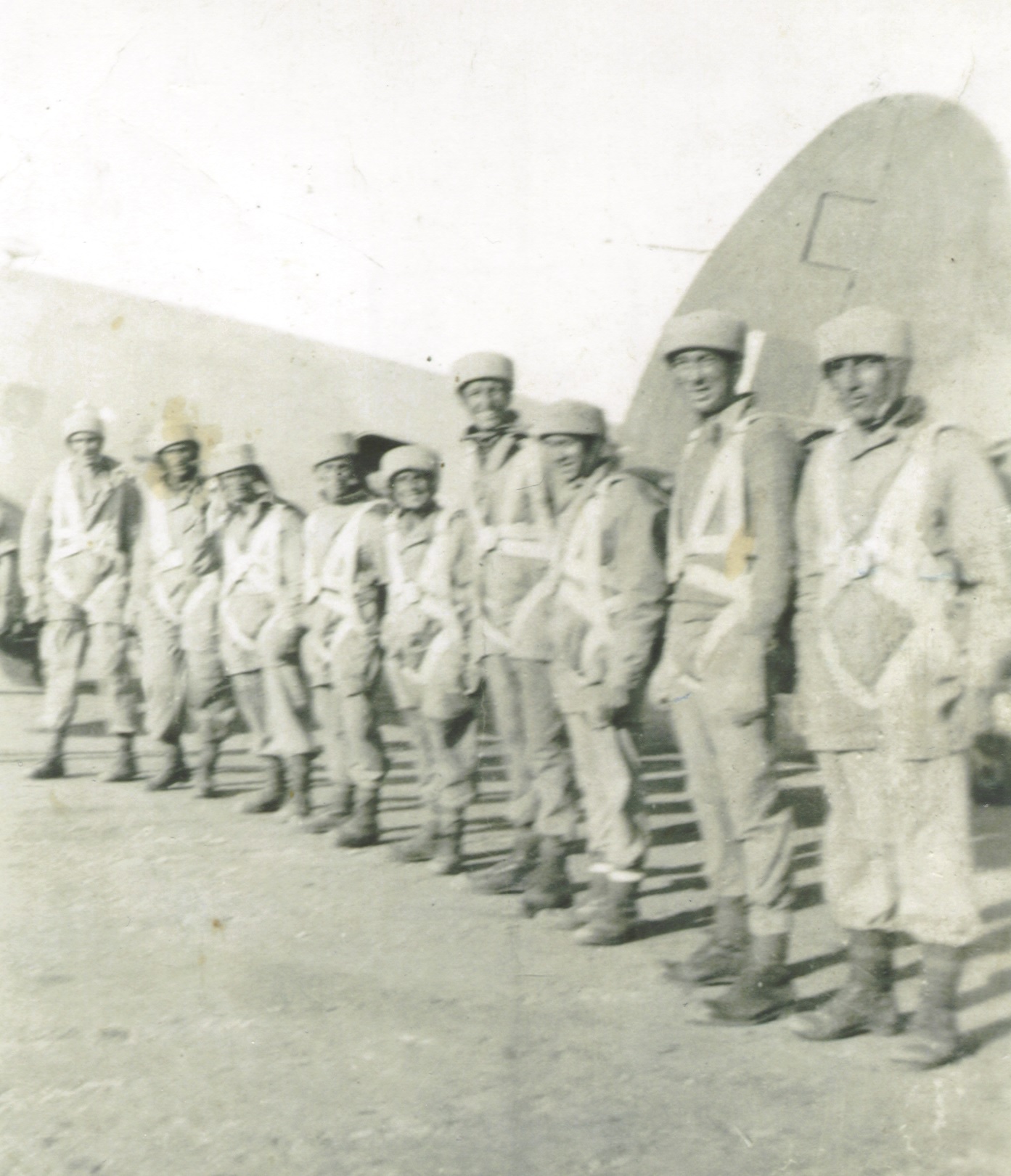 Before joining the 11th Parachute Battalion at the age of 26, he was on parachute
course No. 58 at Ramat David in Palestine from 04 to 16 August 1943. Entering the Battalion he was assigned to 6
platoon, B Company.
Before joining the 11th Parachute Battalion at the age of 26, he was on parachute
course No. 58 at Ramat David in Palestine from 04 to 16 August 1943. Entering the Battalion he was assigned to 6
platoon, B Company.
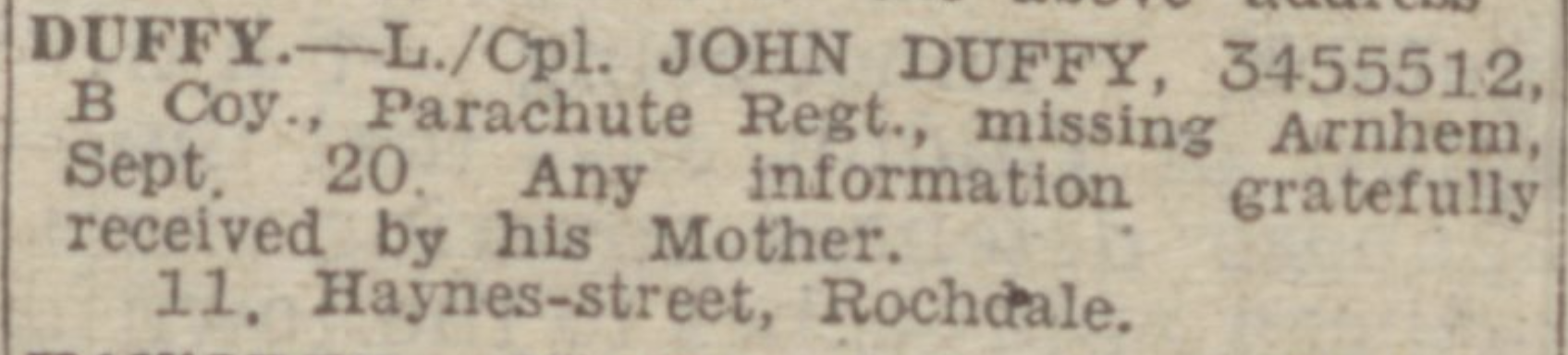 During the Battle of Arnhem he got wounded and eventually taken prisoner of war, reported by The Manchester Evening
News of Thursday 19th October 1944.
During the Battle of Arnhem he got wounded and eventually taken prisoner of war, reported by The Manchester Evening
News of Thursday 19th October 1944.
After being
repatriated to the UK after the war, John was interviewed on July 21st 1945, by a Major of MI9. During the interview,
John said the following:
“I was wounded on 20 September 1944 in the arm at Arnhem, captured in Oosterbeek hospital
and five days later was moved by train to Apeldoorn on 25 September 1944.
Next day I was put in a cattle truck of a
train bound for Germany. There were 25 of us in the truck, the door being fastened by a staple pin outside.
During a
period when we were allowed out, we made a mark inside the truck showing where the outside lock was, as by mutual
consent it was agreed all walking wounded should attempt to escape.
When the train moved off that evening we started
to cut a hole in the truck with our jackknives, large enough to get a hand through and pull out the staple pin on
the door. We lined up in pairs, and after six men had gone, I jumped off with Sergeant William Donald Stone (8
Platoon, C Company, 11th Battalion).
The train was travelling at about 20 m.p.h. and I landed on a bank of grass and
shingle. I joined Sergeant Stone and we decided to make off across country towards Apeldoorn.
We had a map and
compass and walked that night reaching the village of Wilp, (12 miles South-West of Deventer) the following evening.
We were wet through and spoke to some men working in a garden who directed us to a farm nearby. At the farm was an
English speaking student who was in hiding from Nijmegen who acted as interpreter between us and the Dutch farmer,
Mr. Van Beek, with whom we stayed for about five weeks.
About 28 October 1944 the Underground took me by bicycle to
a large holiday camp for Dutch evacuees at Camping Centre Oldenhoven near the village of Eerbeek and run by a
Dutchman, Mr. C.A. Wolzak. Here I met Sergeant Stone again and four other evaders.
We remained here about five weeks
during which time members of the Underground visited us and told us that parties of evaders were being taken across
to the British lines and that arrangements were being made to concentrate another party to include us.
.png "Maj Hugh Maguire (Intell)") Towards the
end of November we were moved over two days by ambulance to a large farmhouse in the area of Barneveld where there
was about 90 men concentrated under Major Hugh Pownall Maguire (General Staff Officer 2nd grade (Intelligence).
Towards the
end of November we were moved over two days by ambulance to a large farmhouse in the area of Barneveld where there
was about 90 men concentrated under Major Hugh Pownall Maguire (General Staff Officer 2nd grade (Intelligence).
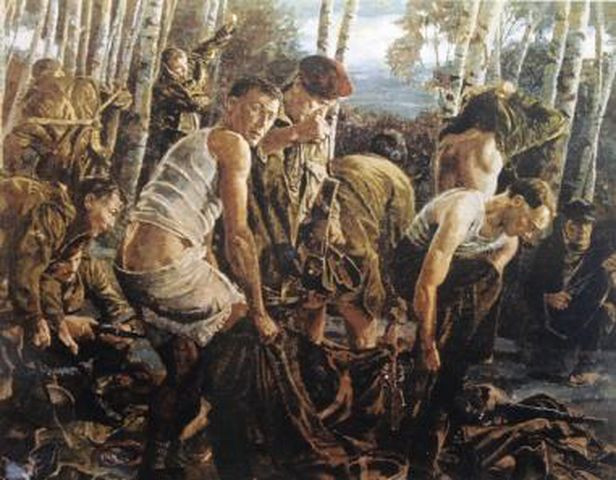 We were told an evacuation plan had been made, called Pegasus II, and were briefed by Major Maguire.
We were armed,
given a battle dress and split into three platoons of 30 under an officer and practised crossing roads, etc. all
day.
I was in the rear party and that night we moved off to plan, with orders that if anything went wrong or we got
split up, to stay wherever we were until someone came back to contact us.
After one-and-a-half hours whilst hiding
by a road to let cyclists go by, an American let off his Sten gun. The route was changed in consequence, continuing
in formation until about midnight when passing between an artillery camp and a searchlight battery, a Major in our
party (name unknown and later killed) came back to tell us a German sentry had seen us, and we were split from the
two forward parties.
After waiting for ten minutes, the Major led us to a fork in the road. We took the left fork
whereas it turned out that the forward parties had taken the righthand fork. I afterwards learned that the sentry
had communicated with the forward guards who challenged us. As they immediately opened fire, I broke away with
Sergeant Stone and six other men into the woods.
We had a short conference deciding to try and fight our way through
to the river crossing point. We broke out of the wood, making our way across country, crossed the main road near
Ede, followed the direction of the Bofors traces shell, and reached the outskirts of Oosterbeek about 04:30 hours
next morning.
We continued walking until we saw a party of nine men, who in the bad light, we mistook to be another
party of our men. We followed them through Oosterbeek where they suddenly broke off into a house and we realized
they had been a German patrol. They opened fire on us, and I split up with three RAF personnel, two of them were
wounded. Both my legs had been badly hurt by falling into a slit trench, but we made our way through gardens of
houses towards the river. I could hardly get along but thought we could get to the river as it was only half a mile
away.
We reached the bank of the river, but the Bofors had stopped firing and we had no torch to signal with. We sat
on the bank and I suggested trying to hide up until the next evening but a number of Germans came out of a built up
emplacement in the river bank and recaptured us.
Next day I was taken to a hospital at Ede where I saw Major Maguire
and about 40 – 50 of our party who had been taken prisoner. From Ede I was taken to Apeldoorn, where I was
questioned by the Gestapo.
 I was moved to hospital in the village of Lingen with Major Cedric James ‘Shorty’
Longland (16 Parachute Field Ambulance R.A.M.C.).
I was moved to hospital in the village of Lingen with Major Cedric James ‘Shorty’
Longland (16 Parachute Field Ambulance R.A.M.C.).
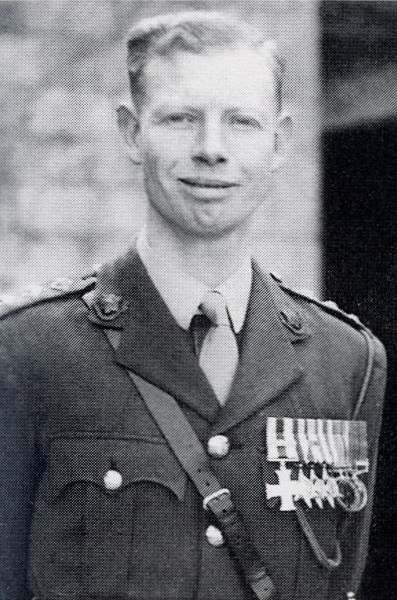 We were in a ward with 20 British including Major Douglas Edward
‘Doug’ Crawley (OC B Company, 2nd Parachute Battalion), who made contact with me as I had made a previous escape.
Two foreign workers in the hospital used to play bridge with us in the ward, and we arranged with one of them to
bring us a key of the ward so we could escape, as it was simple to leave the hospital once outside the ward. We
promised to take him with us and he collected rations etc. for the attempt.
We were in a ward with 20 British including Major Douglas Edward
‘Doug’ Crawley (OC B Company, 2nd Parachute Battalion), who made contact with me as I had made a previous escape.
Two foreign workers in the hospital used to play bridge with us in the ward, and we arranged with one of them to
bring us a key of the ward so we could escape, as it was simple to leave the hospital once outside the ward. We
promised to take him with us and he collected rations etc. for the attempt.
On the afternoon before the night we
were going, I was sent to another hospital nearby and Major Crawley was sent there later. On his arrival I was
returned to the first hospital and we believed the plan had become known.
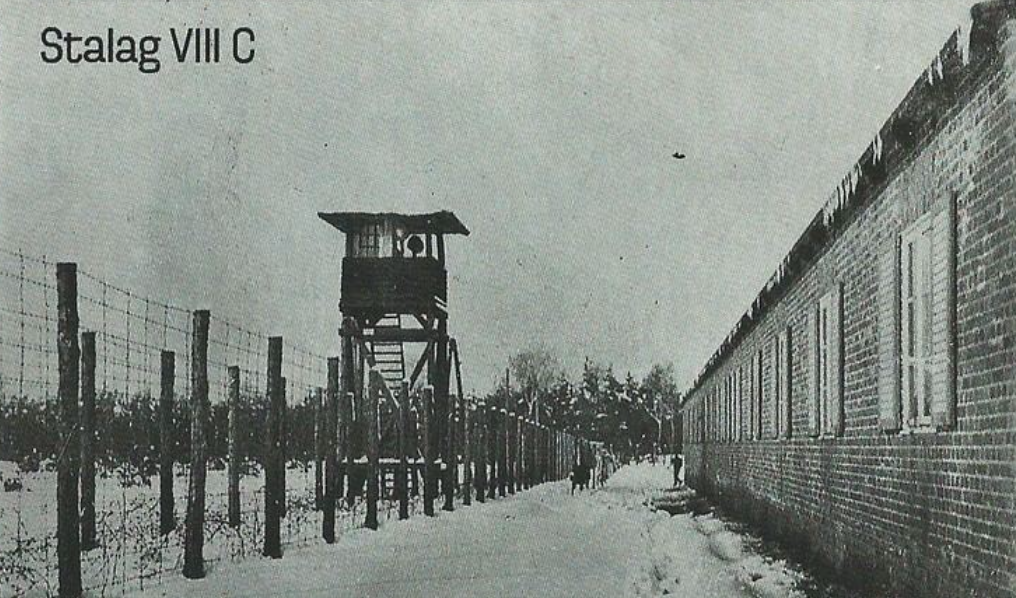 That evening I attempted to get away on my
own, by walking out of the ward, down the stairs into the yard, where, however, I was held up by a German orderly
who called the guard.
That evening I attempted to get away on my
own, by walking out of the ward, down the stairs into the yard, where, however, I was held up by a German orderly
who called the guard.
I was liberated in the hospital of Stalag VIIIC in Sagan, Lower Silesia region, Poland, on 16
February 1945 by Russian troops who sent us on the road with a guide.
We walked for 18 days on food we killed on the
way and the Russians then put us in a castle at Krackowitch in Poland for about 9 days.
They then sent us by train
to Odessa which journey took 21 days from where we were sent by ship to the U.K.”
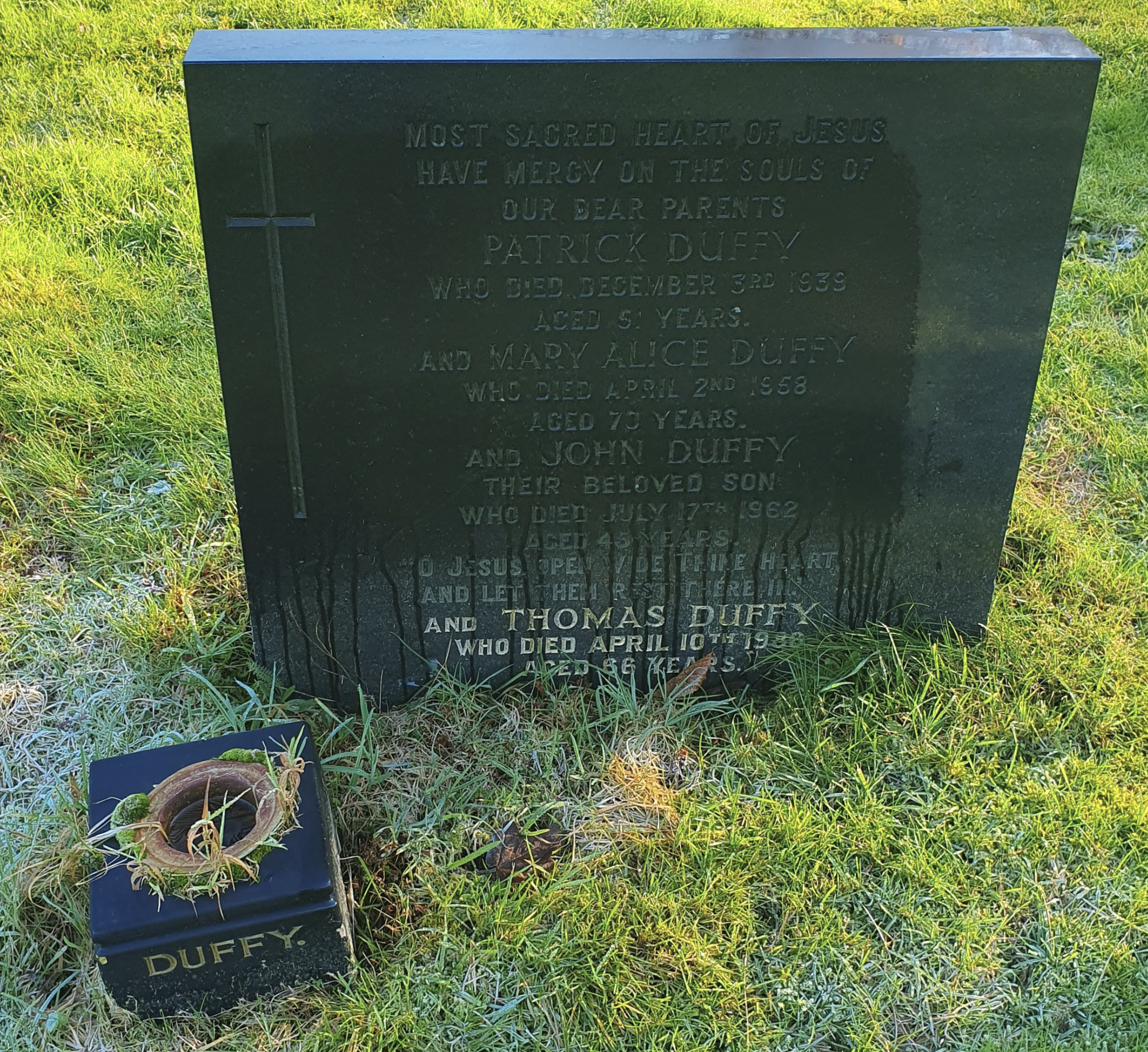
Following the war John returned to Rochdale, living there until his death on July 17th 1962, just 10 days before
his 46th birthday. He was buried in Rochdale Cemetery and Crematorium, alongside his parents, Patrick and Mary Alice and later joined by his brother Thomas.