6288554 Sergeant George John Butler "Curly"
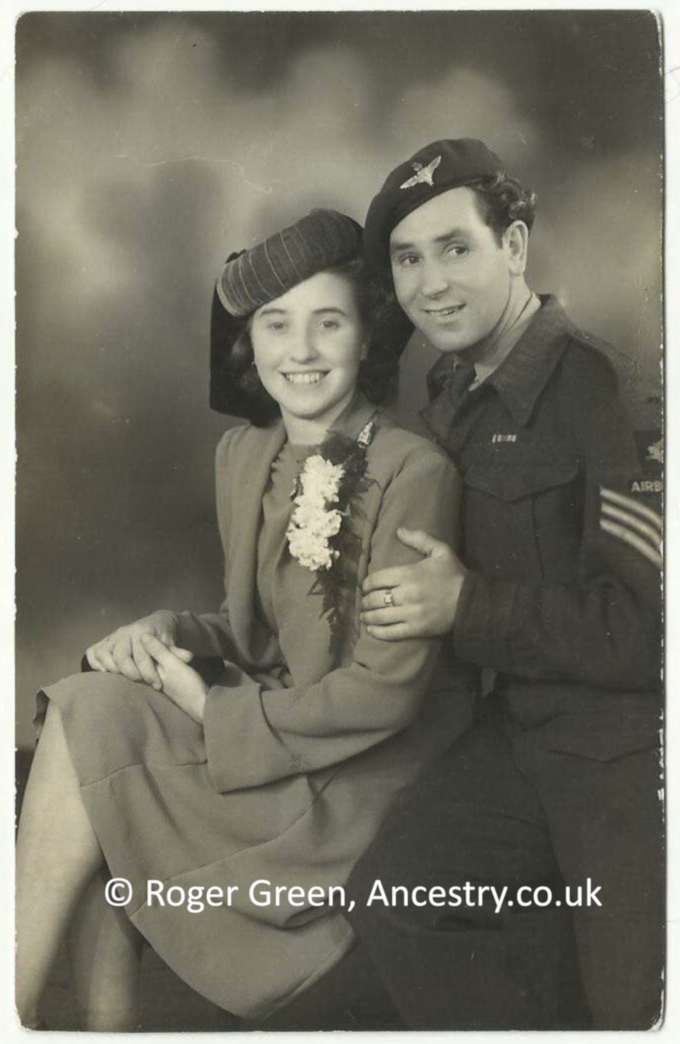
6288554 Sergeant George John ‘Curly’ Butler was born on 8th November 1918 at 114 Tyres Street, Southwark
London
to parents George John Scruton Butler and Mary Ann Butler (née Harris). He was baptised on 24th November
1918 at
St Peter,
Vauxhall: Kennington Lane, Lambeth, Middlesex.
At the time of George's baptism, his father's occupation was listed as Soldier. On 1st November 1915, George's
father had enlisted with the Royal Field Artillery (Camberwell Brigade) as a Gunner and served during World War 1.
By 19th June 1921, George's father had completed his military service and was working as a Water Side
Labourer for Hovis Ltd Victoria Flour Merchants, while his mother was working as a Pickle Bottler for Cross and
Blackwell,
9 Elms Lane. George also had an elder sister, named Mary.
He served as a soldier from the very beginning of the war. First seeing
action at Dunkirk, then onwards to other theatres of war.
In 1943 he transferred to the Parachute Regiment. After he was presented with his
parachute qualification wing following parachute course No. 50 at Ramat David in Palestine
from 25 June until 07 July 1943, he was assigned to 7 platoon, C Company, 11th Parachute Battalion, as the platoon
sergeant.
However, he still found time on 22nd January 1944 to marry Marjorie Isabel Dunkley at All Saints Church,
Northampton. Marjorie, like many young women during World War 2, had been a Land Army girl.
George put his experiences during the Battle of Arnhem in 1985 on paper. The following summary is the
result.
“On Monday September 18, 1944, I
jumped on drop zone Y west of the village of Ede in Holland. On entering
Arnhem after a long stop-go walk, from the drop zone, an overturned tram lay on its side in the centre of the
main
road. Enemy small arms fire soon dispersed my company. Defence positions were taken up behind cover and in slit
trenches dug in people’s well-tended gardens.
After a long delay the signal came to re-form and advance towards the
bridge. Much activity was going on around the St Elisabeth Hospital. We had not continued far before a sudden
burst
of fire opened up, spraying the wall behind me with bullets. Miraculously I was only hit once in the foot.
After a
moment of stillness came another volley of fire, this time sweeping the street before me. A voice shouted:
“Sergeant
Butler has caught it”.
Quickly I was helped in the nearest house. My Platoon officer,
Second Lieutenant R. de Courcy
Peele (K.I.A. 22 September 1944) came rushing in, commiserated and said:
“Hold up here for the
medics”.
How
fortunate I was to meet Mr. and Mrs. De Winkel, who with nurse like efficiency bathed my foot, extracted the
bullet,
dressed the wound and supplied a slipper.
During all this time there were sounds of a hell of a battle going
around
the bridge.
I stayed with the De Winkel family until the next morning an English speaking neighbour
called in
with
information of British soldiers occupying numerous houses. The Dutchman offered to escort me to them and I
parted
from my new found friends.
Off we ventured, with me hobbling behind my guide in the direction of the bridge. It
seemed miles, having to shelter in three houses on the way, in between frightening incidents of evading the
enemy.
Eventually we reached our destination. In the house there were four paratroopers from my own battalion. We took
up
positions around the windows, gradually the sporadic shooting became intense. Suddenly a hail of bullets
shattered
into the room.
After a lull, loud Bosche commands were being given and then came another firing spree into the
house. Stealthily slipping out by the rear, I unexpectedly came face to face with a young German soldier. For a
fraction of a second we looked at each other, frozen like petrified rabbits. I squeezed the Sten-gun trigger,
still
looking at me he slumped to the ground.
Sickened with remorse, in desperation, I found myself struggling
lamely
through gardens and somehow climbing fences. My foot was throbbing, blood seeping through the bandage, my
slipper
was lost, my foot the size of a balloon and single rifle shots pursuing me.
I found a garden shed and lay on the
floor, just listened to the outside bombardment. A Dutchman saw me and waved me to come into his house. When a
moment of inactivity prevailed, I literally hopped along as fast as I could.
The moment I banged on the door,
willing hands helped me in. My arrival was greeted with enthusiasm by five Private soldiers and a Corporal from
varied units. All accepted me eagerly as senior rank. How grateful I was to be with such fine company, we set
about
getting ourselves really organised.
Then suddenly the lookout shouted:
“Tanks”.
One cruised past menacingly. A
truck
stood at the end of the street, with Jerry soldiers taking cover. My boys were now firing and swearing with
desperate bravado, most of us claiming more than our actual share of hits.
After a while the inevitable
happened. An
agonising cry and a lad fell back, a bullet in his chest. No field dressing was enough for this wound. We lay on
the
floor giving what help we could, in less than a minute I decide to surrender our two seriously wounded. Someone
tore
a piece of white sheet from the bed for a flag.
We shook hands and waving our flag of truce, we placed our two
unfortunate men outside. Within ten minutes they were carried away. We wondered how long we could last.
The climax came swiftly. First a spell of machine gun and rifle fire, then a thunderous bang and a part of the
house was
ripped open. I did not see any of my courageous fighting soldiers again, comparative strangers, but
unforgettable
comrades. The next thing I knew was that the Germans had put me on a stretcher and I was taken to a dressing
station. The
medical orderly redressed my foot and offered me a cigarette and sausage. A German officer said to me:
"It will soon be all over".
Yet in spite of calamitous outcome, I am proudest to have fought amongst the people of Arnhem."
London,
4th June 1985, George Butler.
George was taken prisoner of war from that moment on. Given the POW number 96006, he was held at
Stalag XIIA Limburg. However, it took some time for this to be confirmed.
Daily Reports: Missing, Dead, Wounded and POWs, 1939-1947:
- On 18th October 1944 George was reported Wounded and Missing on 21st September 1944
- On 22nd November 1944 it reported: Casualty List No 1610. Previously reported on Casualty List No 1580 as Wounded & Missing now reported Wounded believed Prisoner of War in German Hands Location Unknown. Wounded & Missing 21/09/1944 with Unit as Parachute Regiment, 11th Battalion.
- On 8th May 1945 George was now a member of 7th Parachute Battalion: "Casualty List No. 1751. Previously reported Prisoner of War in German Hands Location Unknown on Casualty List No. 1610 now Not Prisoner of War; previous Theatre of War: Western Europe."
On 22th October 1949, when he applied for his war medals, George was living at 3 Halpin Place, Walworth,
London SE17
On 7th January 2009 George died in London. He was survived by his wife Marjorie who died on 28th May 2013.