5509701 Private Richard Bentley
On 27th March 1921 5509701 Private Richard Bentley was born at 14 Colville Street, Stoke-on-Trent,
Staffordshire (source 1939 Register) to parents Richard and Florence.
In 1939 he was working as a Cement Braze Block Maker and was unmarried.
On the 24th of
September 1940 he enlisted into The Hampshire Regiment, later transferring to the Royal Artillery and was
serving with a Field Regiment when he
volunteered for Airborne Forces.
Between 8 and 23 April 1944 he successfully completed Parachute Course
111,
at Royal Air Force Ringway near Manchester. His Parachute Instructors comments were:
‘Keen hard worker – has jumped well’.
He was
initially sent to the No. 1 Airborne Forces Holding Unit, before being posted to the 11th Parachute
Battalion.
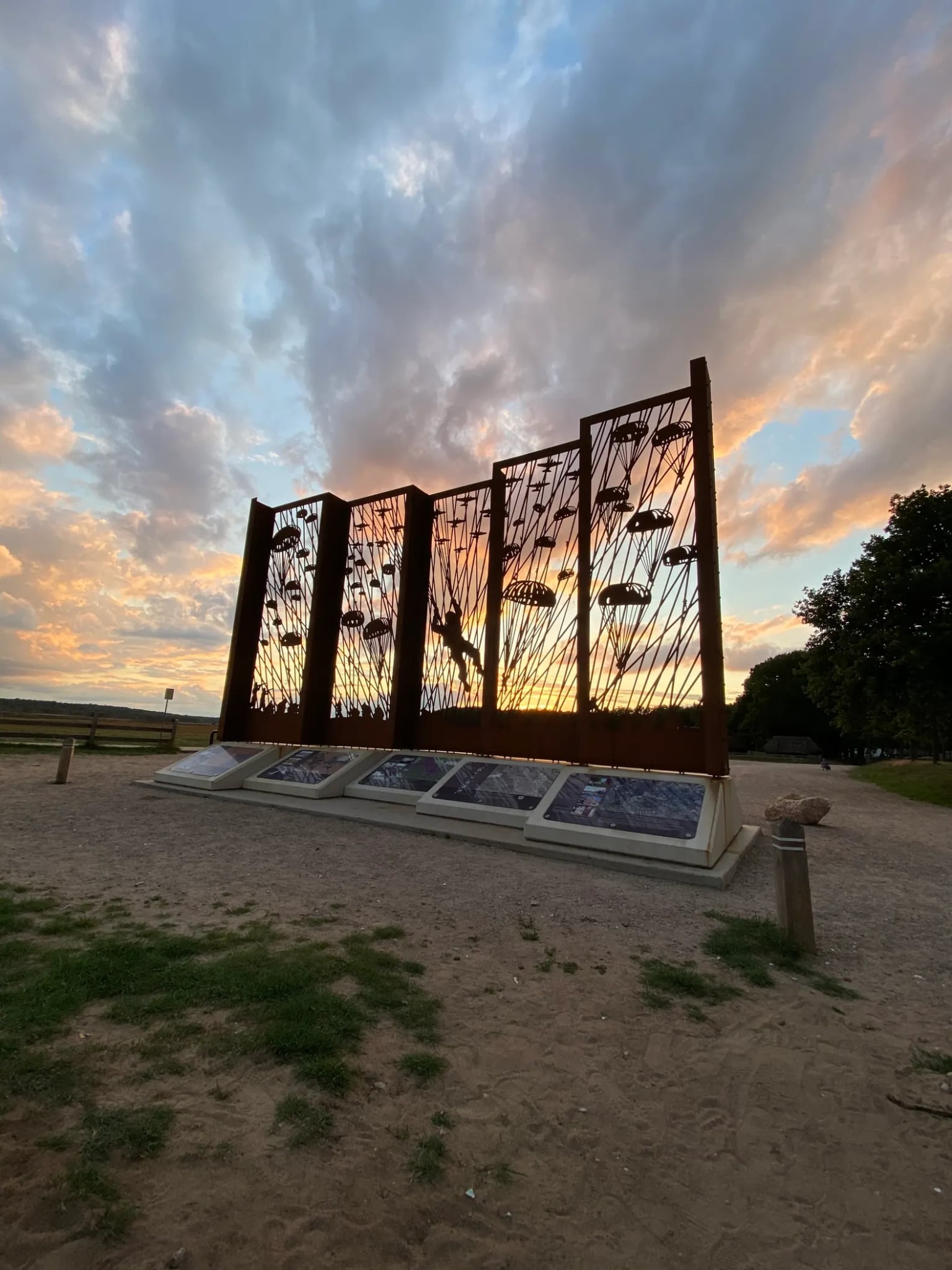 On the afternoon of Monday September 18 1944 the 11th Parachute Battalion landed on the Drop Zone ‘Y’,
just east of the village of Ede and were separated from other battalions of the 4th Parachute Brigade. The
Battalion was sent to
reinforce the 1st and 3rd Parachute Battalions and the 2nd South Staffs, trying to fight through to the 2nd
Parachute Battalion which had captured the northern end of the Arnhem Road bridge.
On the afternoon of Monday September 18 1944 the 11th Parachute Battalion landed on the Drop Zone ‘Y’,
just east of the village of Ede and were separated from other battalions of the 4th Parachute Brigade. The
Battalion was sent to
reinforce the 1st and 3rd Parachute Battalions and the 2nd South Staffs, trying to fight through to the 2nd
Parachute Battalion which had captured the northern end of the Arnhem Road bridge.
After fierce fighting
in the
vicinity of St. Elizabeth Hospital and in the Lombok district west of the hospital on Tuesday September 19,
1944, Richard's battalion was decimated from over 600 to 150 men. They had to retreat to Oosterbeek.
According to the eyewitness account of
Captain King (OC Support Company), the following occurred on Thursday
September 21, 1944, in the vicinity of Accacialaan and Hogeweg in Oosterbeek.
“By this time Major Peter Milo was badly wounded in the head and very much ‘hors de combat’. We were attacked at some strength by German infantry, tanks, and Self-Propelled guns for most of the morning. Machine-gun fire came from the region of the railway bridge. The tanks were attacking from the east and north. Sometime after lunch the Germans managed to set the house next to me alight. We put out the fire, but three men were killed, Second Lieutenant Richard de Courcy Peele, and two men next door. Soon after this however we were forced to retire in the face of a fierce and uncontrollable burning”.
After researching the Battle of Arnhem for many years, Lt Col (ret) Gerrit Pijpers OBE draws the
following conclusion:
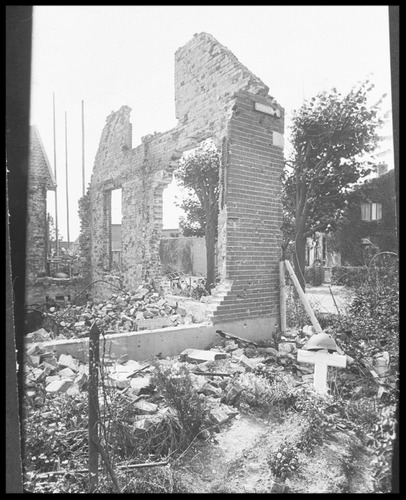 Reading the story of Captain King, I (GP) almost dare to say the following.
On that
date of September 20, 1944, an enormous battle took place in the vicinity of the Acacialaan and the
Hogeweg. The
Graves Concentration Report Form dated September 21, 1945, indicates that the field graves of Private
Richard
Bentley, Private John Edward Booth and 2nd Lieutenant Richard de Courcy Peele,
were found at the same
location.
This coupled with the story of Captain King and given where King was at the time when these three men were
killed, makes it very likely that Private Richard Bentley was killed in battle on September 20, 1944 at the
age
of 23.
Reading the story of Captain King, I (GP) almost dare to say the following.
On that
date of September 20, 1944, an enormous battle took place in the vicinity of the Acacialaan and the
Hogeweg. The
Graves Concentration Report Form dated September 21, 1945, indicates that the field graves of Private
Richard
Bentley, Private John Edward Booth and 2nd Lieutenant Richard de Courcy Peele,
were found at the same
location.
This coupled with the story of Captain King and given where King was at the time when these three men were
killed, makes it very likely that Private Richard Bentley was killed in battle on September 20, 1944 at the
age
of 23.
All three men were taken to the Arnhem Oosterbeek War Cemetery in 1945 and buried in the same row.
Richard is buried at grave 23.A.3.