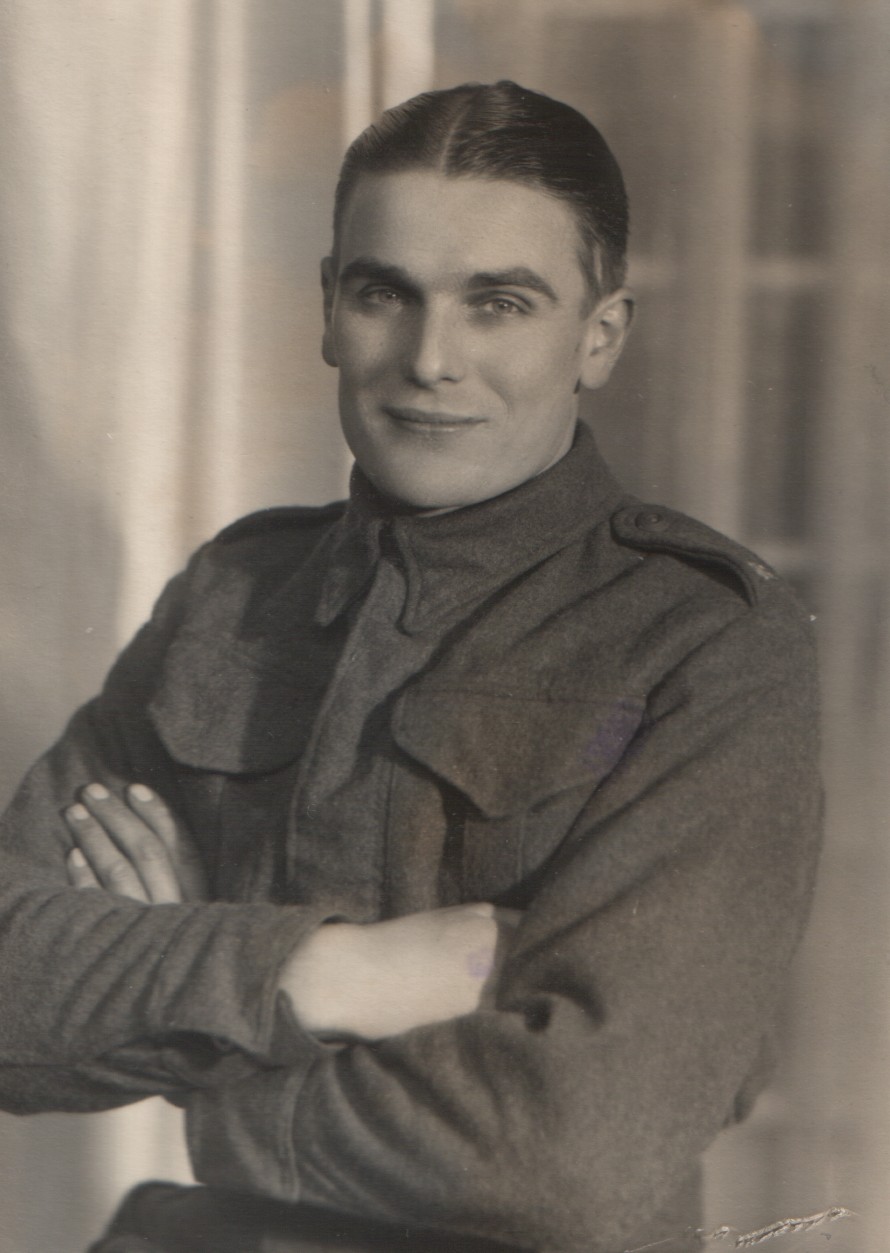
2190500 Sergeant Robert William Thompson
Thank you, Jeff
Sgt Bob Thompson's story epitomises the actions of the members of The XIth Parachute Battalion during the Battle of Arnhem. Please read Bob's story on this page and admire the bravery of an "ordinary" man who performed extraordinary feats to ensure the freedom we enjoy today.
"Utrinque Paratus"
September 19 2024 Arnhem Speech by Jeffrey Thompson
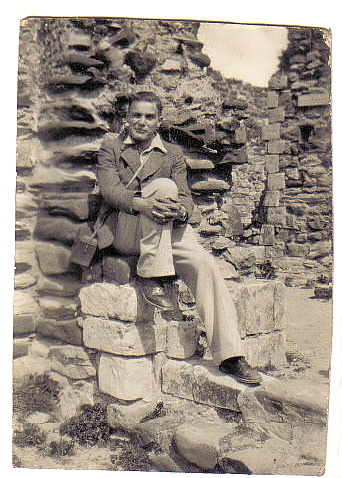
Thank you Wouter
Meneer Alderman, ladies and gentleman.
As Wouter said, my name is Jeffrey Thompson, Jeff, and I am the son
of Sergeant Robert Thompson,
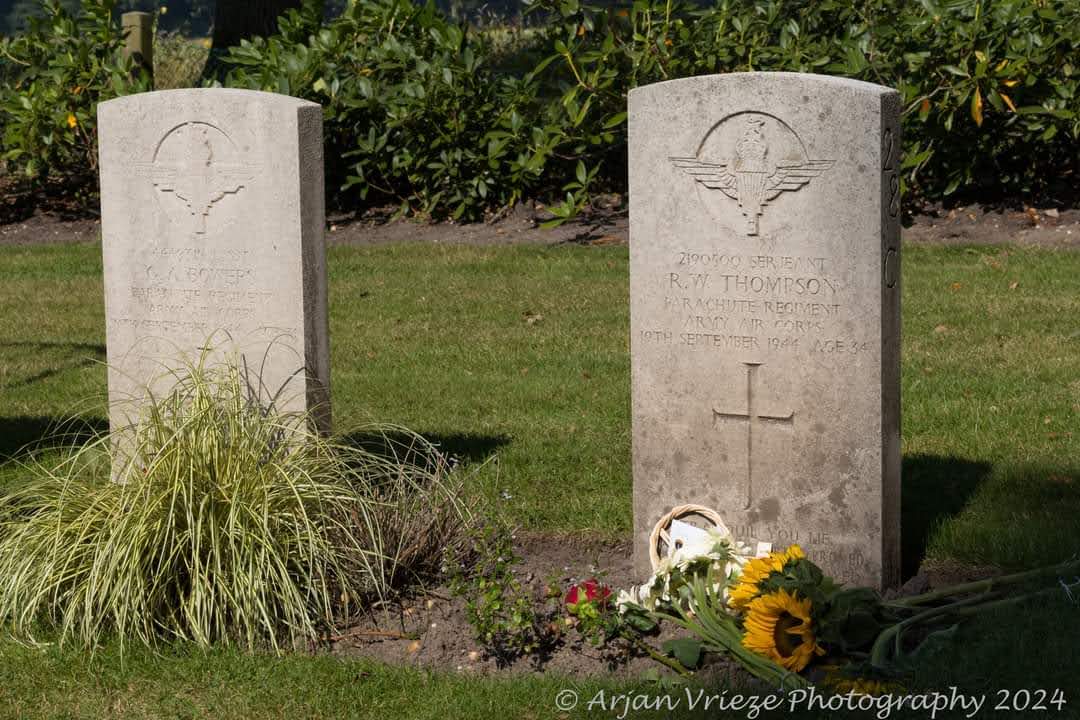
who was buried here with his friend
George Bowers 80 years ago today. 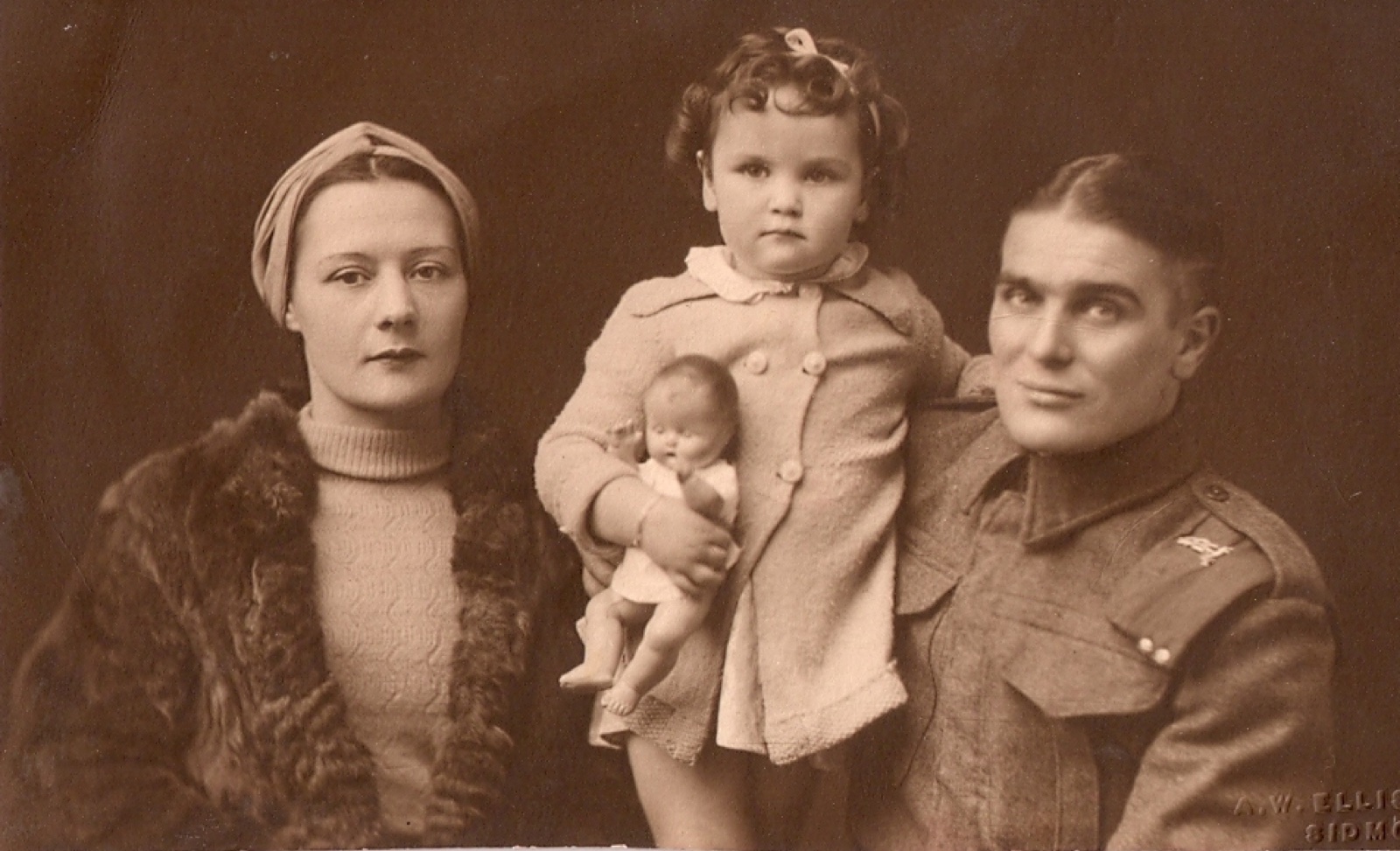 This is my sister Jose, his daughter, with her husband David,
and his grandson Graeme, and first we would like to thank all of you who have organised and taken part in this
ceremony,
from Wouter and Joost to the children with their flowers.
This is my sister Jose, his daughter, with her husband David,
and his grandson Graeme, and first we would like to thank all of you who have organised and taken part in this
ceremony,
from Wouter and Joost to the children with their flowers.
We are very moved and very grateful indeed, just as we are still grateful for the help the Dutch gave the
Parachute Regiment and
other British soldiers during the battle. Burying our dead, caring for our wounded, then hiding our men when the
fighting was over
took as much courage as it did to jump out of a Dakota on to enemy fire.
Our father’s name, our Dad’s name, was Robert, but his family in London called him Bob and the soldiers he fought
with called him Tommo.
He was not a professional soldier. He was an artisan, a highly skilled plasterer, who had seven years training, and
put up the
very decorative and ornate, Roccoco ceiling in the entrance to the BBC’s Broadcasting House in London.
That is a skill we have lost today.
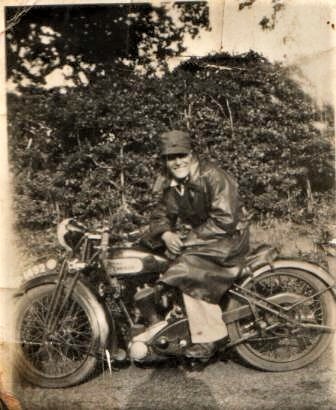 He loved
motorbikes and
football and to stay fit he never smoked and never drank alcohol.
(Well, that’s what he told our mother.) Just the same, when my sister asked people about him after the War, they
always smiled,
because Bob had a rich sense of humour and showed friendship and generosity to all who knew him.
He loved
motorbikes and
football and to stay fit he never smoked and never drank alcohol.
(Well, that’s what he told our mother.) Just the same, when my sister asked people about him after the War, they
always smiled,
because Bob had a rich sense of humour and showed friendship and generosity to all who knew him.
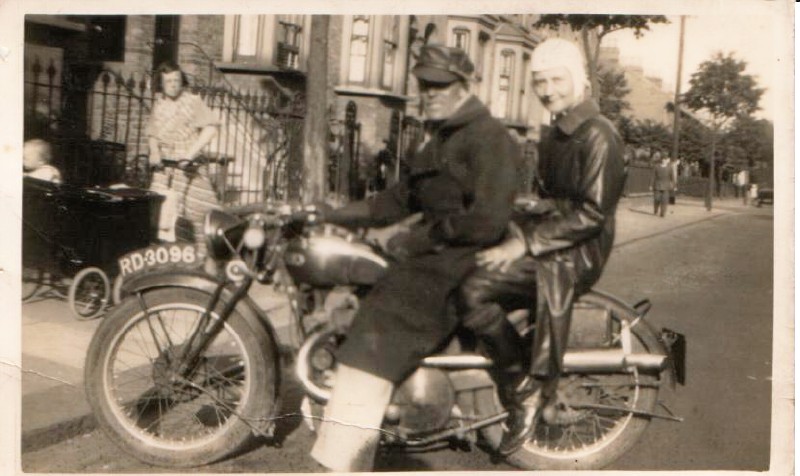 For our mother,
Vera, who married him when they were both 23, no other man compared, before or after his death and she never married
again.
He asked her for a first date when they were both fourteen, but she refused him because he couldn’t swim or play
tennis,
her favourite activities. So he went away for a few months and learned to do both, then came and asked her again,
successfully.
I think that tells you a lot about both of them.
For our mother,
Vera, who married him when they were both 23, no other man compared, before or after his death and she never married
again.
He asked her for a first date when they were both fourteen, but she refused him because he couldn’t swim or play
tennis,
her favourite activities. So he went away for a few months and learned to do both, then came and asked her again,
successfully.
I think that tells you a lot about both of them.
The 1930s were economically hard times for them, but their lives were just improving, my mother told me, when the
War came, and though
he didn’t need to Bob volunteered for the Army immediately. Talking of the Nazis, his only explanation for that was:
“They have to be stopped”.
 In 1940 he fought in France and was evacuated with the
rest of the British Army at Dunkirk. This had him standing on
a ship with
hundreds of other men and no room to sit down for 16 hours with his kit bag on his head.
In 1940 he fought in France and was evacuated with the
rest of the British Army at Dunkirk. This had him standing on
a ship with
hundreds of other men and no room to sit down for 16 hours with his kit bag on his head.
In 1941 he was sent to North Africa and fought there.
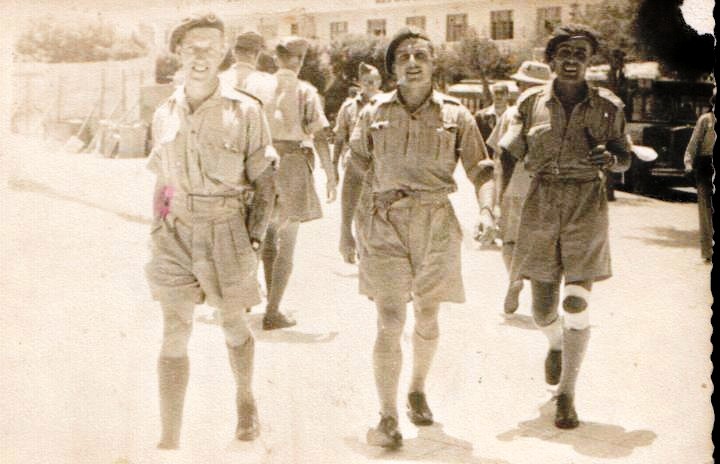 In 1943 he joined the Parachute
Regiment in Palestine and was appointed to the 11th Battalion. In September he and
the battalion dropped on to the Greek island Kos, to take an
airfield from the Italians, who surrendered at once and rolled up their parachutes for them. I have an Italian medal
he took as a souvenir.
In 1943 he joined the Parachute
Regiment in Palestine and was appointed to the 11th Battalion. In September he and
the battalion dropped on to the Greek island Kos, to take an
airfield from the Italians, who surrendered at once and rolled up their parachutes for them. I have an Italian medal
he took as a souvenir.
But a year later came Arnhem, where the 11th Battalion took terrible casualties. They dropped on the second day, the
18th September, under fire and made their way from Ginkel Heath towards the bridge, getting as far as the Saint
Elizabeth Hospital before they were held up by German tanks and artillery.
At that point the 11th Battalion was
ordered to go north and cross the railway line here, in an attempt to flank the Germans. Tragically, they met a
stronger German force attacking south, trying to flank the British. Just the same, George, my father and their
platoon crossed the railway and got to the top of the embankment we can see there.
 We know very little for certain
about George Bowers. He was single and perhaps a professional soldier. But we know for sure he was very brave
because he came over that embankment under machine gun fire and took a German trench that was about here, where he
was buried. The Germans then fired on him and he fell.
We know very little for certain
about George Bowers. He was single and perhaps a professional soldier. But we know for sure he was very brave
because he came over that embankment under machine gun fire and took a German trench that was about here, where he
was buried. The Germans then fired on him and he fell.
Bob, our father, then heard a wounded man calling out from the trench in pain, which might have been a German. He
was sure though that it was George, his friend, and started over the embankment to save him. The Germans shot at him
and missed and he got down, but then he tried to save George again and this second time they did not miss and he
died instantly. He was thirty four years old [34 years, 7 months, and 20 days]. George was thirty one.
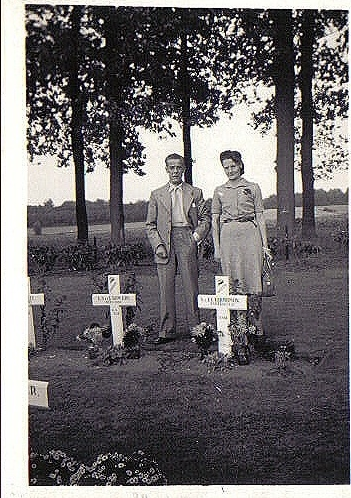 Then, as you know, led by Mr. Yongman, who saw their deaths from his house, the two friends were buried here and
later were buried side by side at Oosterbeek, where they are now.
Then, as you know, led by Mr. Yongman, who saw their deaths from his house, the two friends were buried here and
later were buried side by side at Oosterbeek, where they are now.
You will probably agree, that war had to be fought and to win it we needed men and women prepared to risk their
lives, just as the people of Arnhem risked their lives to help the British and Poles defeat the Nazis. But bravery
and sacrifice always has a price.
My father’s death was a life-long tragedy for my mother and also my sister, who
remembers him as her loving daddy, which sadly I don’t, as I was only two years old. And the help the Dutch gave us
during and after the battle came at a terrible price for them, as you know.
We must remember our heroes, yes, but
also never forget the cost of making war. Plato, the philosopher, said only the dead have seen the last of war.
Let’s try and hope to prove him wrong.
Thank you again.
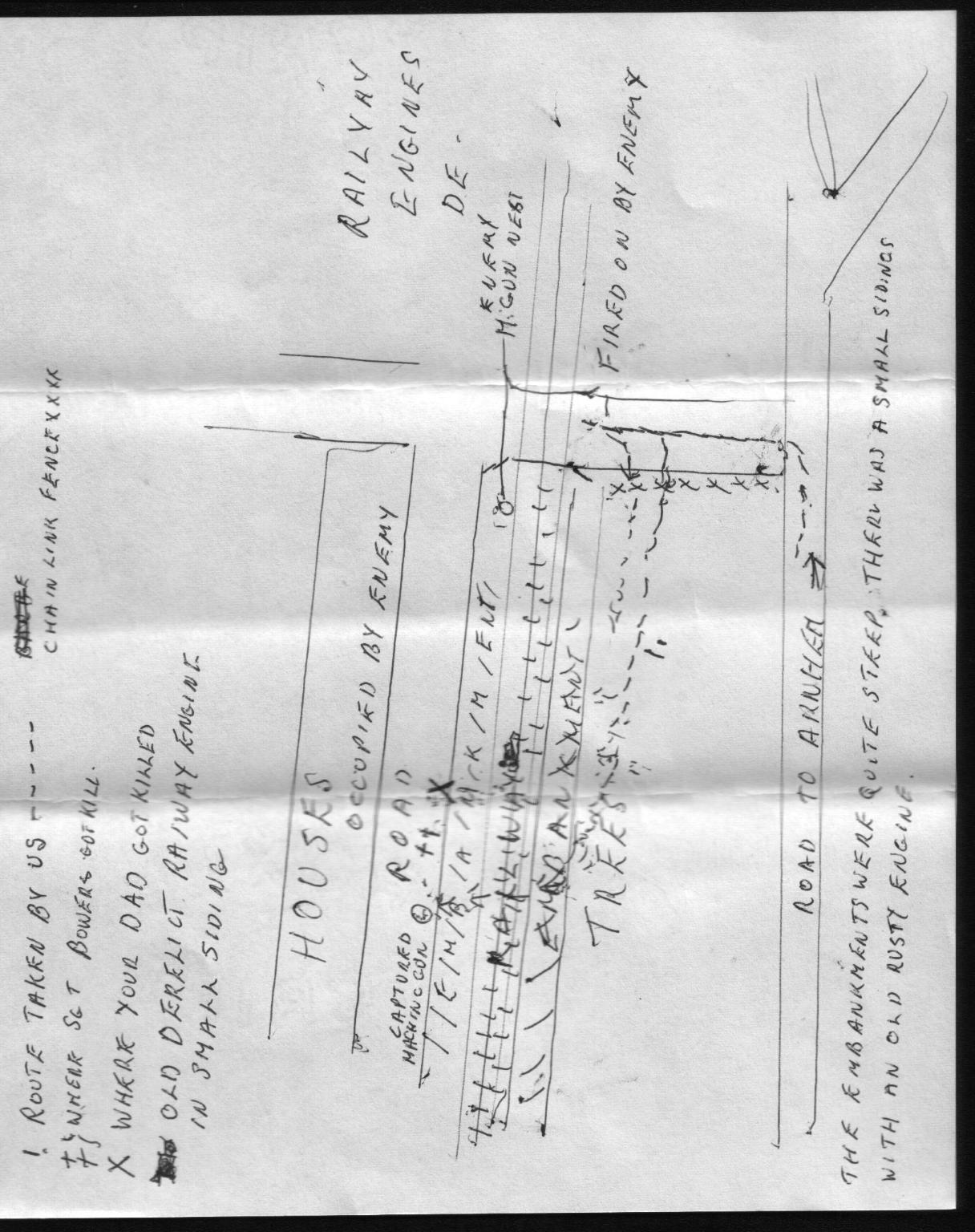
Dear Mr Thompson,
To start with your father was serving in the 3" Mortar Platoon, "S" Company, 11th Br, the parachute regiment.
I first met him when I was posted to the platoon, he was then a Corporal and our instructor on the 9" Mortar.
All the time I knew him he was a popular N.C.O. I never knew him put anybody on a charge, but would give you a good telling of instead.
He was always called Tommo. Back in England he was promoted sgt.
When we got into Arnhem and was stopped from advancing any further by the
fighting in front of us we were ordered to go north over the railway to try to contact the 10th Bn advancing into Arnhem over the north side of
the railway.
When the front of the column went to cross the railway bridge they came under fire from the enemy on the other side. We cut holes in a fence
on the left hand side of the road into trees and got onto the Railway Embankment opposite by then.
Sgt Bowers and two others had crossed
the railway .... and had captured two Germans in a slit trench in a matter of seconds. The enemy opened fire on Sgt Bowers and who ever was
with him and we see them go down. The two Germans went to walk away so we shot them.
A group of us with Sgt Thompson went over the railway to rescue them if possible. Some occupied the enemy slit trench. But Tommo wanted to
find out about Sgt Bowers. We moved along the corner of the embankments. Tommo, me and two other men to where we could hear some one talking
coherently. Your Dad insisted that it was George. It was in my opinion one of the Germans, but nobody could persuade your Dad it was not
Sgt Bowers.
We know that to go over the embankment would fetch enemy fire on to you. Your Dad looked over the embankment and a shot rang out and he thought
he had been hit but it was a piece of gravel thrown up by the bullet had hit him in the chest. The other two soldiers said We have had enough of
this and went back. I pleaded with Tommo to give it up but he was still adamant. As I turned around to get behind a bush to give him covering fire,
he must have got up to look over the top of the embankment and he came rolling head over heels down to the bottom of the embankment without making
a sound or trying to stop. I went down to him and patted his face and I could not hear or see him breathing. I went to the end of an old Railway
Engine and shouted but I got no response. Everyone had returned back over the railway. I went back to Tommo again. Still no response.
By then a fire fight was going across the Railway lines. There was nothing I could do and I was on the wrong side.
Waited for a lull in the firing and made a break for it and just about made it. With an ankle wound from a spent piece of shrapnel I lasted
another three days before I ended up with three bullet holes in me.
I cannot think of anything else but if you have any questions don't hesitate to get back in touch with me. I am sorry about the writing these days I am bit shaky.
Yours sincerely,
Joe Berry